Weight Loss Injections Near Me: How to Find Safe GLP-1 Treatment in 2026
Weight loss injections near me are now one of the most searched health topics in the United States, and the reason is simple: a new generation of prescription medicines is helping people lose far more weight than diet and exercise alone ever did. The two names you will hear most often are Wegovy, which contains semaglutide, and Zepbound, which contains tirzepatide. Both are weekly injections approved by the United States Food and Drug Administration for chronic weight management, and both work by mimicking gut hormones that reduce appetite and slow digestion. This guide explains what weight loss injections are, who qualifies for them, what they cost in 2026, where to find a legitimate provider near you, and which warning signs should make you walk away. It is general information only and is not medical advice, so any decision about treatment belongs in a conversation with a licensed clinician who knows your health history.
What Are Weight Loss Injections and How Do They Work?
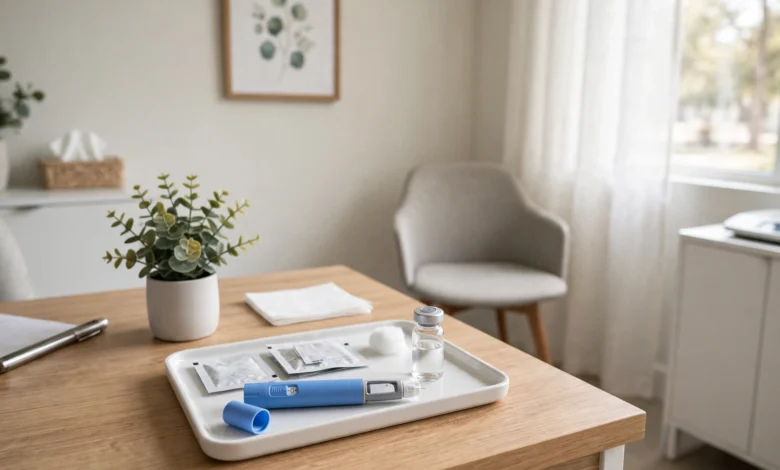
Weight loss injections are prescription medicines, given as a small injection under the skin once a week, that belong to a class called GLP-1 receptor agonists. The best-known products are Wegovy, made by Novo Nordisk, and Zepbound, made by Eli Lilly. Wegovy contains semaglutide, while Zepbound contains tirzepatide, a drug that acts on two gut-hormone pathways instead of one. These medicines copy hormones your gut releases after eating, and they tell your brain that you are full sooner, slow the rate at which your stomach empties, and quiet the constant food thoughts that make dieting so hard for many people. They are not appetite suppressants in the old sense, and they are not a shortcut around healthy habits, because every approval and every clinical trial pairs them with a reduced-calorie diet and more physical activity. The weight loss they produce is real and large, which is why demand has exploded, but they are serious medicines with real side effects, and they only work while you keep taking them, so understanding them properly before you search for a clinic is worth the effort.
The results that made these medicines famous come from large clinical trials, and the numbers are worth knowing before you commit to anything. In the STEP 1 trial, adults taking weekly semaglutide at the 2.4 mg dose lost an average of about 14.9 percent of their body weight over 68 weeks, compared with roughly 2.4 percent for people on a placebo. In the SURMOUNT-1 trial, adults taking tirzepatide at the highest 15 mg dose lost an average of about 20.9 percent of their body weight over 72 weeks. Those are averages, which means some people lose more and some lose less, and a meaningful share of people stop because of side effects or cost. Wegovy also gained an additional approval from the FDA in March 2024, becoming the first weight-loss medicine approved to reduce the risk of cardiovascular death, heart attack and stroke in adults with cardiovascular disease and overweight or obesity. Zepbound is also approved to treat moderate to severe obstructive sleep apnoea in adults with obesity. None of this makes the medicines right for everyone, but it explains why doctors now take them seriously as medical treatment rather than cosmetic help.
Who Qualifies for Weight Loss Injections?
Weight loss injections are prescription-only medicines, and the FDA labelling sets clear rules about who they are for, so not everyone who wants to lose a few pounds will qualify. Wegovy and Zepbound are approved for adults with obesity, meaning a body mass index of 30 or higher, or for adults who are overweight, with a body mass index of 27 or higher, and who also have at least one weight-related health condition such as high blood pressure, type 2 diabetes or high cholesterol. Wegovy is also approved for certain children aged 12 and older with obesity. A clinician will normally check your body mass index, your blood pressure, your blood sugar and your medical history before prescribing, and they should also ask about any history of thyroid cancer, pancreatitis, gallbladder disease or severe stomach problems, because these medicines carry a boxed warning about the risk of thyroid C-cell tumours and are not suitable for everyone. This is general information only, and only a licensed clinician who examines you can decide whether you qualify.
It is also important to understand what these medicines are not, because confusion here is common and costly. Ozempic, which also contains semaglutide, and Mounjaro, which also contains tirzepatide, are approved to treat type 2 diabetes, not for chronic weight management, and using them for weight loss is off-label, which affects insurance coverage and dosing. The on-label weight-management versions are Wegovy and Zepbound, and they are dosed differently for that purpose. In late 2025 the FDA also approved an oral Wegovy tablet, the first once-daily semaglutide pill for weight management, and in April 2026 it approved Foundayo, an oral GLP-1 medicine from Eli Lilly, so injections are no longer the only option. If needles are the thing holding you back, ask your clinician about the tablet options, but remember that the pill versions are still prescription medicines with the same need for medical supervision and the same kind of side effects.
How to Find Weight Loss Injections Near Me
Finding weight loss injections near me starts with deciding what kind of provider you want, because the options range from your own primary care doctor to specialist weight-management clinics, medical spas and telehealth services. The safest starting point is usually your own doctor or a referral to an obesity-medicine specialist, because they already know your history and can follow you over time. Many hospitals and large clinics now run dedicated medical weight-loss programmes, and a search for weight loss injections near you will also surface dedicated weight-loss clinics and medical spas in most American cities. Telehealth has become a major route as well, with the manufacturers themselves running direct programmes, and online providers can prescribe after a video consultation and arrange delivery. Whichever route you choose, the provider should be a licensed clinician, should take a proper medical history, should check your blood pressure and blood work, and should schedule follow-up visits to adjust the dose and watch for side effects.
When you compare providers, ask practical questions before you pay anything, because the quality of care varies widely and the cheapest offer is not always the safest. Ask whether the clinic prescribes only FDA-approved medicines, whether the price they quote includes the consultation and follow-up visits or only the medicine itself, how they handle dose increases, what happens if you have side effects, and whether they offer nutrition and activity support alongside the prescription. Be very cautious of any provider that sells compounded semaglutide or tirzepatide as a cheap substitute, because compounded products are not reviewed by the FDA for safety, purity or dosing accuracy, and the FDA shortage designation that once allowed mass-produced compounded versions has ended. A legitimate clinic will be open about its prices, will not pressure you to pay for months of treatment upfront, and will be willing to say no if the medicine is not right for you. If a provider cannot answer these questions clearly, keep looking.
How Much Do Weight Loss Injections Cost in 2026?
Cost is the biggest practical barrier to weight loss injections, and the price you actually pay depends heavily on insurance, dose and which programme you use, so it helps to know the full range before you start. At full retail cash price, a month of Wegovy pens costs roughly 1,300 to 1,800 dollars and a month of Zepbound pens costs roughly 1,000 to 1,500 dollars, depending on the dose and the pharmacy. Those are the prices you would pay walking into a pharmacy with no insurance and no manufacturer programme, and they are the reason most people never pay the list price. Both manufacturers now run self-pay programmes that cut the cost sharply: through NovoCare, Wegovy pens cost 199 dollars a month for the first two fills and then 349 dollars a month, while the oral Wegovy tablet costs 149 to 299 dollars a month depending on dose, and through LillyDirect, Zepbound costs 299 dollars a month at the 2.5 mg dose, 399 dollars at 5 mg and 449 dollars at 7.5 to 15 mg when refills arrive within 45 days. With commercial insurance that covers the drug, manufacturer savings cards can bring the cost down to as little as 25 dollars a month, and a Medicare GLP-1 Bridge programme charges 50 dollars a month for eligible patients. Prices change often and offers expire, so confirm the current price with the programme before you enrol, and treat any price quoted in an article as a guide rather than a promise.
There are also costs beyond the medicine itself that are easy to overlook when you budget for treatment. Most providers charge for the first consultation and for follow-up visits, and some charge for blood tests, body-composition scans or nutrition coaching, so ask for the full monthly cost rather than the medicine price alone. Weight loss injections are a long-term treatment, and the weight usually returns if you stop, so think in terms of a year or more of costs rather than a single month. Insurance coverage varies enormously, and many employer plans still exclude weight-loss medicines, so check your plan documents or call your insurer before your first appointment and ask specifically whether Wegovy or Zepbound is covered for chronic weight management. If your plan excludes them, the manufacturer self-pay programmes are usually the next best route, and your clinician may be able to help with a prior-authorisation request if you have a qualifying condition such as type 2 diabetes or sleep apnoea.
What Are the Side Effects and Risks?
Every medicine has side effects, and weight loss injections are no exception, so knowing what to expect helps you decide whether the benefit is worth it for you. The most common side effects are stomach-related, and they include nausea, vomiting, diarrhoea, constipation, stomach pain and reduced appetite, which are usually worst when the dose is being increased and often settle as your body adjusts. Eating smaller meals, avoiding fatty or spicy food, and staying hydrated help many people through the early weeks, but a minority of people find the nausea too much and stop treatment. More serious but less common risks include pancreatitis, gallbladder problems, kidney problems from dehydration, and a rare risk of thyroid tumours, which is why the medicines carry a boxed warning and why people with a personal or family history of medullary thyroid cancer should not use them. There has also been concern about muscle loss alongside fat loss, which is one reason clinicians recommend strength training and enough protein while you are on treatment. This is general information only, and you should discuss your own risks with a clinician before starting.
There are also practical risks that have nothing to do with the medicine itself, and they matter just as much. Fake and compounded products sold online are a real problem, and the FDA has warned that products sold as semaglutide or tirzepatide from unregulated sellers may contain the wrong dose, the wrong substance or nothing useful at all. Never buy weight loss injections from a website that does not require a prescription, and never accept a product that arrives without proper labelling and a pharmacy name you can check. If you become pregnant while taking these medicines, tell your clinician straight away, because they are not recommended during pregnancy. And if you have surgery planned, tell your anaesthetist that you take a GLP-1 medicine, because the way it slows stomach emptying can affect anaesthesia. These are the kinds of details a good provider will cover with you, and their absence is a warning sign.

Do Weight Loss Injections Work Without Diet and Exercise?
Weight loss injections work best when they are combined with changes to diet and activity, and the honest answer is that the medicine makes those changes easier rather than replacing them. The drug reduces your appetite and quiets food cravings, which means smaller portions feel satisfying and the effort of sticking to a reduced-calorie diet becomes much less punishing. But the clinical trials that produced the headline results all paired the medicine with a reduced-calorie diet and more physical activity, so the numbers you read about assume that combination. People who take the medicine and change nothing else still tend to lose weight, but usually less, and people who use the appetite suppression to build lasting habits, such as regular walking, strength training and protein-rich meals, tend to keep more of the weight off. Some people pair medical weight loss with wellness treatments such as lymphatic drainage massage near me, which some clinics offer alongside their programmes, but no massage or spa treatment replaces the medicine or the lifestyle changes. Think of the injection as a tool that lowers the difficulty of the work, not as a replacement for the work itself.
Keeping the weight off is the part that deserves the most honest discussion, because it is where many people are disappointed. Studies show that most people regain a large share of the lost weight within a year of stopping the medicine, because appetite returns to its previous level and the old eating patterns come back with it. That does not mean the treatment has failed, but it does mean you should go in with a long-term plan, which may include staying on a lower maintenance dose, continuing regular follow-up with your clinician, and treating the diet and activity changes as permanent rather than temporary. Some people do manage to stop and keep the weight off, usually because they used the treatment period to rebuild their habits from the ground up, but that is the exception rather than the rule. A good provider will talk about the exit plan before you start, not after you have already paid for a year of treatment.
How to Choose a Safe Clinic Near You
Choosing a safe clinic comes down to a short checklist that you can run through in a single phone call or visit. When you search for weight loss injections near me, you will see a mix of clinics, medical spas and telehealth services, so a short checklist helps you sort the safe options from the risky ones. First, confirm that the prescriber is a licensed doctor, nurse practitioner or physician assistant, and that the clinic is a real medical practice rather than a sales operation. Second, ask whether they prescribe only FDA-approved Wegovy or Zepbound, and be wary of any clinic whose main offer is compounded semaglutide at a suspiciously low price. Third, ask about follow-up, because a clinic that hands you a prescription and never sees you again is not providing medical care. Fourth, ask for the total cost in writing, including consultations, blood tests and any membership fees, so there are no surprises. Fifth, check reviews, but read them critically, because weight-loss clinics attract both genuine praise and paid promotion. And finally, trust your instincts: if a clinic pressures you to decide today, demands a large upfront payment, or promises a specific amount of weight loss, those are all reasons to walk away and find a better provider.
It is also worth knowing that the market is changing quickly, and what is true today may be different in a year. Oral versions of these medicines are now approved, new medicines are in late-stage trials, and prices have already fallen sharply from their original list prices as the manufacturers compete for self-pay patients. That is good news for anyone considering treatment, but it also means you should not rush into a long contract based on today’s prices. A month-to-month arrangement with a provider you trust is usually a better choice than a prepaid year-long package, because it keeps you free to change course if a better option appears or if the medicine does not suit you. Keep your expectations realistic, keep your clinician involved, and remember that the goal is lasting health rather than a number on a scale.
Conclusion
Weight loss injections near me are no longer a fringe treatment, and for many people they are a genuine medical option, backed by large trials and FDA approvals, with average weight loss of around 15 percent on Wegovy and around 21 percent on Zepbound at the highest doses. But they are prescription medicines with real side effects, real costs and a real need for medical supervision, and they work best as part of a long-term plan that includes diet, activity and regular follow-up. The safest way to find them is through a licensed clinician, whether that is your own doctor, a specialist weight-management clinic or a reputable telehealth provider, and the safest way to pay for them is through insurance or the manufacturers’ own self-pay programmes rather than cheap compounded alternatives. Ask the hard questions, get the full price in writing, and go in with your eyes open, and weight loss injections can be a powerful tool for better health.
Is Wegovy or Zepbound Better for Weight Loss?
Both medicines are effective, and the honest answer is that the better one depends on your body, your insurance and your tolerance for side effects. In clinical trials, Zepbound produced larger average weight loss than Wegovy, with about 20.9 percent of body weight lost at the highest 15 mg dose over 72 weeks, compared with about 14.9 percent for Wegovy at 2.4 mg over 68 weeks, but those were separate trials with different groups of people, so the comparison is not exact. Zepbound also costs more at self-pay prices, at 299 to 449 dollars a month through LillyDirect, while Wegovy pens cost 199 dollars for the first two fills and then 349 dollars a month through NovoCare. Some people tolerate one better than the other, and some insurers cover one but not the other, so the practical choice often comes down to what your plan covers and what your clinician recommends for your situation.
How Quickly Do Weight Loss Injections Start Working?
Most people notice their appetite falling within the first few weeks, because the dose is increased gradually over about 16 weeks to reach the full maintenance dose. Weight loss usually starts slowly, at around 1 to 2 pounds a week once the dose builds up, and the largest losses tend to come in the first six to twelve months. Your clinician will normally review your progress after about three months and may adjust the dose or discuss alternatives if you have not lost at least 5 percent of your starting weight by then. The gradual start is deliberate, because it helps your body adjust and reduces nausea, so a slow beginning is normal rather than a sign that the medicine is not working.
Do You Need a Prescription for Weight Loss Injections?
Yes, weight loss injections are prescription-only medicines in the United States, and any legitimate provider will require a consultation and a prescription before supplying them. Any website or seller offering Wegovy, Zepbound, semaglutide or tirzepatide without a prescription is not a legitimate source, and the product may be fake, contaminated or wrongly dosed. The prescription requirement exists because these medicines need medical screening, dose titration and follow-up, and skipping that step puts your health at risk. If cost is the barrier, the manufacturers’ self-pay programmes are the safe route, not an unregulated online seller.
What Happens If You Stop Taking Weight Loss Injections?
When you stop taking a GLP-1 weight loss injection, your appetite usually returns to its previous level within weeks, and most people regain a large share of the weight they lost within a year. This is the normal behaviour of the medicine rather than a personal failure, because the drug was actively suppressing appetite while you took it. To reduce regain, clinicians recommend keeping the diet and activity habits you built during treatment, continuing strength training to protect muscle, and discussing a maintenance plan with your clinician before you stop, which may include a lower dose or a switch to another treatment. Some people do keep the weight off after stopping, but it takes a deliberate long-term plan.
Are Weight Loss Injections Covered by Insurance?
Coverage varies widely, and many employer health plans still exclude weight-loss medicines even when they cover the same drugs for diabetes. If your plan does cover Wegovy or Zepbound for chronic weight management, a manufacturer savings card can reduce your cost to as little as 25 dollars a month, and a Medicare GLP-1 Bridge programme charges 50 dollars a month for eligible patients. If your plan excludes them, the manufacturer self-pay programmes, NovoCare for Wegovy and LillyDirect for Zepbound, are usually the cheapest legitimate route, at roughly 149 to 449 dollars a month depending on the product and dose. Always check your own plan documents and confirm the current price with the programme before you enrol, because prices and offers change frequently.