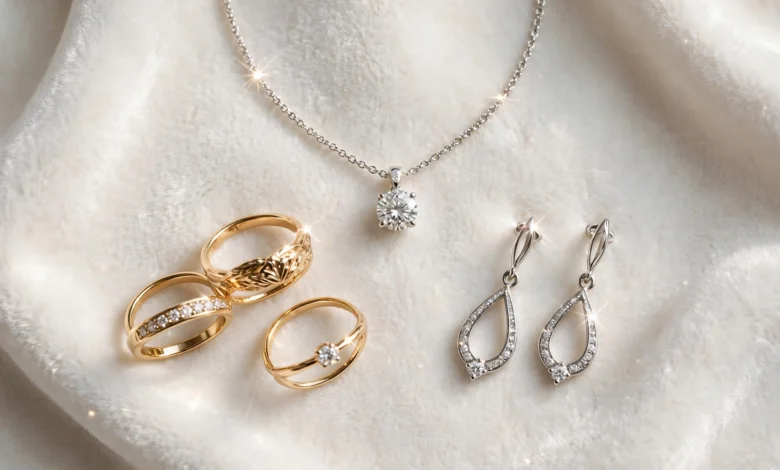
How to Clean Jewelry at Home: Safe Methods for Gold, Silver and Diamonds
If you want to know how to clean jewelry at home, the short answer is simple: soak the piece for ten to twenty minutes in lukewarm water with a few drops of mild dish soap, brush it gently with a soft toothbrush, rinse it in clean lukewarm water, and pat it dry with a soft, lint-free cloth. That routine is safe for gold, platinum, diamonds, sapphires and rubies, and it is the method jewellers and gem care guides recommend most often. The real skill is not the cleaning itself, which is easy, but knowing what not to do, because the wrong product can scratch a stone, strip a plating, or loosen a setting in seconds.

This guide covers how to clean jewelry by material, because gold, silver, diamonds and pearls all need different care, and the method that makes a diamond sparkle can ruin a pearl. It also covers the common mistakes people make at home, from toothpaste to ultrasonic cleaners used carelessly, and explains when a piece should go to a professional instead. Whether you are cleaning a daily-wear ring, a inherited necklace, or a pair of earrings that have lost their shine, the steps below will help you restore them safely without a trip to the jeweller.
Why Does Jewelry Get Dull?
Jewelry gets dull for a simple reason: everyday life coats it in a thin film of skin oil, hand cream, soap residue, sunscreen, hair products and dust, and that film blocks light from reaching the metal and stones. Diamonds are especially affected, because a diamond’s brilliance depends on light entering the stone and bouncing back out, and even a thin layer of hand cream on the back of the stone can make it look cloudy and flat. Gold and silver pick up the same film, and silver has an extra problem in tarnish, a dark layer that forms when silver reacts with sulphur compounds in the air and in everyday substances such as eggs, rubber bands and some cosmetics.
The single worst offender for jewelry, according to jeweller Steven Billig, who has spent forty years in the trade, is chlorine, which can damage certain metal alloys, affect finishes, and potentially weaken settings over time. Swimming in a chlorinated pool or hot tub while wearing jewelry is one of the fastest ways to damage it, and household cleaning products containing bleach or ammonia are just as risky. The good news is that most dullness is surface dirt rather than damage, and it comes off easily with the gentle method described in this guide, which is why regular light cleaning is far more effective than occasional aggressive scrubbing.
What You Need to Clean Jewelry at Home
You do not need special equipment to learn how to clean jewelry at home, and the short supply list below is all you need for most everyday pieces. Start with a small bowl of lukewarm water, a few drops of mild dish soap, a very soft toothbrush kept only for jewelry, and a soft, lint-free cloth for drying. Use plain dish soap with no added moisturisers, no antibacterial agents and no “oxy” component, because those additives can leave a residue on the metal. Distilled water is ideal if your tap water is hard, since minerals in tap water can leave a faint film, but ordinary tap water works fine for most pieces.
Before you clean anything, follow the one rule every jeweller repeats: know exactly what you are cleaning. If you are unsure what a stone is, whether it has been treated, or whether the setting is secure, consult a jeweller before cleaning it at home. Check the piece first by holding it over a bowl, never over an open sink, and look for loose stones, bent prongs or worn clasps, because cleaning a damaged piece can make the damage worse. If anything seems off, take it to a professional first and let them check the setting before you touch it.
How to Clean Jewelry: The Basic Method That Works for Most Pieces
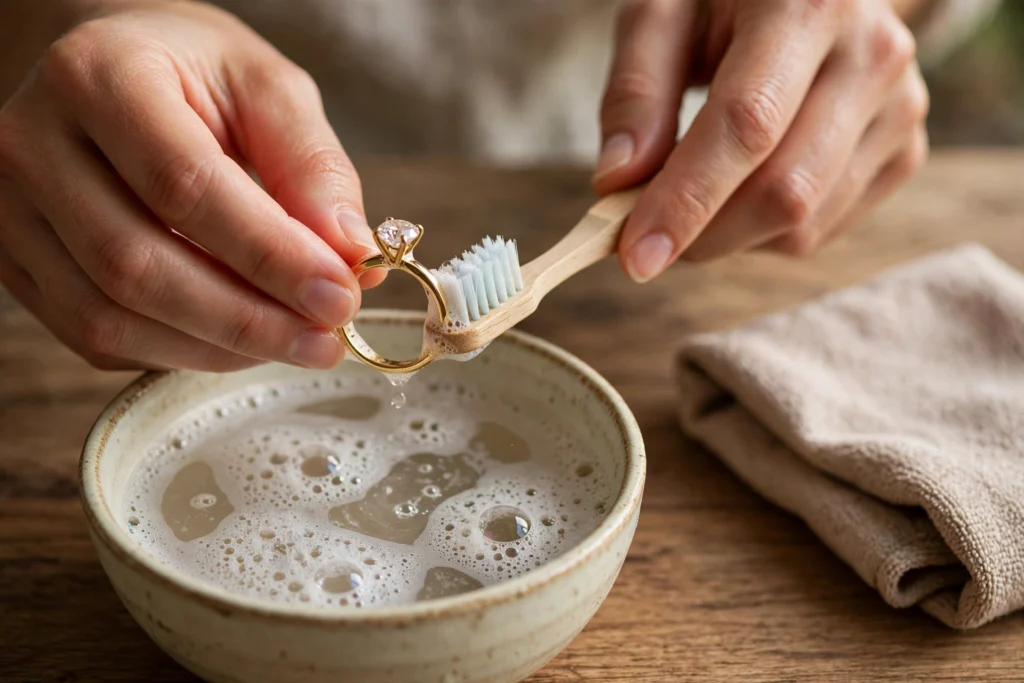
The basic method for how to clean jewelry is the same for most solid gold, silver and diamond pieces without delicate stones, and it takes about half an hour from start to finish. Mix a few drops of mild dish soap into a bowl of lukewarm water, then place the jewelry in the bowl and let it soak for ten to twenty minutes, which loosens lotion, skin oil and everyday grime. For diamonds, some guides recommend a longer soak of up to thirty minutes, because the back of the stone collects the most residue, and the extra time helps the soapy water reach it. Work over the bowl throughout, never over an open drain, so a piece cannot disappear down the sink.
After soaking, take the soft toothbrush and brush the piece gently, using light circular strokes and paying most attention to the back of the stone and around the prongs, where grime collects. Use a 360-degree approach, turning the piece as you go, and let the bristles do the work rather than pressing down, because pressure is what causes scratches. Then rinse the piece in a separate bowl of clean lukewarm water, not under a running tap, and pat it dry immediately with a soft, lint-free cloth. Finish by buffing gently with a plain soft cloth, and check the piece in good light before putting it away, because the difference should be visible straight away.
How to Clean Gold Jewelry
Gold jewelry is straightforward to clean, but the karat matters, because pure 24-karat gold is soft and scratches easily, while lower karats are mixed with copper or silver to make them harder. The warm soapy water method described above is safe for all karats of gold, and it is the method jewellers recommend for everyday cleaning. Soak the piece for ten to twenty minutes, brush gently with a soft toothbrush, rinse in clean lukewarm water, and pat dry with a lint-free cloth, and the gold should regain its shine without any special products. For pieces that see daily wear, such as rings and bracelets, this light cleaning every couple of weeks keeps them looking new.
There are two things to avoid with gold. First, never use abrasive cleaners, including toothpaste and baking soda pastes, because they scratch the metal, and the higher the karat, the more easily it scratches. Second, be careful with rhodium-plated white gold, which has a thin rhodium coating over a gold alloy: polishing compounds and silver polishing cloths are mildly abrasive and wear the plating away, and silver dip cleaners can attack the plating and the metal beneath it. If your white gold looks yellowish, that usually means the rhodium plating has worn thin, and no amount of home cleaning will fix it; a jeweller can re-plate it, which is a quick and inexpensive job.
How to Clean Silver Jewelry
Silver jewelry needs the same gentle approach, with one extra problem to manage: tarnish. Sterling silver reacts with sulphur in the air to form a dark layer, and the more the piece is exposed to air, cosmetics and rubber, the faster it tarnishes. The warm soapy water method works well for light tarnish and everyday dirt, and a soft polishing cloth designed for silver can remove heavier tarnish, but use it lightly, because silver cloths are mildly abrasive and repeated hard polishing thins the metal over time. For oxidized silver, which has darkened recesses as a deliberate design feature, avoid baking soda pastes and strong cleaners, because they can strip the oxidation and ruin the look.
The most important rule for silver is to keep harsh chemicals away from it. Bleach, chlorine and ammonia can discolor silver, damage its finish, and weaken the metal, and they should never be used as cleaners. Do not soak silver for long periods either, because prolonged water exposure can encourage tarnish, and always dry it thoroughly before storing. The best way to keep silver bright is to wear it regularly, since the friction of wearing slows tarnish, and to store it in a sealed pouch or a fabric-lined box away from air and humidity when it is not being worn.
How to Clean Diamond Jewelry
Diamonds are the hardest natural material on earth, but that does not mean a diamond ring is indestructible, and the setting is far more vulnerable than the stone itself. The warm soapy water method is the standard way to clean diamonds, and it is safe for natural and lab-grown diamonds alike, including most fracture-filled stones. Soak the ring for twenty to thirty minutes to loosen the hand cream, sunscreen and soap residue that collect behind the stone, then brush gently with a soft toothbrush, taking a 360-degree approach around the setting, and rinse in a separate bowl of clean water. Diamonds can be cleaned this way as often as daily, and many people who wear a diamond ring every day find that a weekly clean keeps it sparkling.
The one thing to check before cleaning a diamond is the setting. If a prong is bent, a stone feels loose, or the ring has taken a knock, take it to a jeweller before you clean it, because brushing a loose stone can dislodge it entirely. Ultrasonic cleaners are usually safe for a securely set, untreated diamond, but the Gemological Institute of America advises leaving ultrasonic and steam cleaning to a jeweller, who checks for loose stones first, and they should be skipped entirely for fracture-filled diamonds. A quick professional check once a year, combined with regular home cleaning, is the best routine for any diamond piece you wear often.
How to Clean Pearls and Delicate Stones
Pearls, opals, emeralds, turquoise and tanzanite need a much gentler routine than gold or diamonds, and the rule for all of them is simple: wipe only, never soak. Pearls are porous and easily damaged by acids, alcohol, ammonia, perfumes and hairspray, so they should only ever be wiped with a soft, damp cloth, and never soaked in any liquid cleaner for more than a few seconds. Opals are sensitive to temperature shock and dehydration, so they should never be steamed or put in an ultrasonic cleaner, and emeralds, which are often oiled, should never be soaked, because soaking leaches the oil out of the stone.
The guiding principle is that when a piece mixes stones, you follow the most delicate one. A ring with a diamond and a pearl, for example, is cleaned as a pearl piece, not a diamond piece, which means a gentle wipe and nothing more. The same applies to turquoise, lapis and malachite, which absorb water and are damaged by acids and abrasives, and to amber and coral, which should never be soaked at all. If you are unsure what a stone is, or whether it has been treated, ask a jeweller before cleaning it, because a single wrong step can damage a delicate stone permanently.
What Not to Use on Jewelry
Knowing how to clean jewelry also means knowing what never to use, and the list of common mistakes is long. Toothpaste is one of the most frequent errors, because people assume that something that cleans teeth will make jewelry sparkle, but toothpaste is abrasive and can scratch both metal and gemstones. Bleach, chlorine and ammonia are worse, because they can discolor metal, remove plating, damage precious-metal alloys, and potentially weaken prongs and settings over time. Natural home remedies are not automatically safe either: vinegar, baking soda and lemon juice can be unsafe for opals, pearls and other porous or delicate stones, because acids and abrasives can damage, etch, discolor or dull them.
Ultrasonic cleaners deserve a special warning, because they are useful in the right hands and dangerous in the wrong ones. They work by vibrating dirt loose, but if a stone is loose, the vibration can shake it out of its setting entirely, and rings with many small accent stones are especially vulnerable. Jewellers check the setting before using an ultrasonic cleaner, and they advise home users to leave that step to a professional. The same caution applies to steam cleaners, which can crack delicate stones and should never be used on pearls, opals or emeralds. When in doubt, the warm soapy water method is always the safe choice.
How Often Should You Clean Your Jewelry?
How often you should clean your jewelry depends on how often you wear it and what it is made of. A ring worn every day collects hand cream, soap and skin oil constantly, and a light clean once a week keeps it looking its best, while a necklace worn occasionally may only need cleaning every few months. Diamonds benefit from regular cleaning, because their brilliance depends on light reaching the stone, and a weekly soak is enough for most daily-wear diamond rings. Gold and silver pieces worn often can be cleaned every couple of weeks, and pearls should simply be wiped with a soft cloth after each wear to remove perfume and body oils.
Beyond regular cleaning, it is worth having a professional check once a year, especially for rings and pieces with stones. A jeweller can check prongs, clasps and settings for wear, clean the piece thoroughly, and spot problems before a stone is lost. If you notice a stone moving, a prong catching on fabric, or a clasp that no longer closes securely, do not wait for the annual check; take the piece in straight away. Regular light cleaning at home, combined with an annual professional inspection, is the routine that keeps jewelry looking good for decades.
How to Store Jewelry So It Stays Clean Longer
Cleaning is only half the story, because how you store jewelry determines how quickly it gets dirty again. Store each piece separately, ideally in a fabric-lined box or a soft pouch, so that harder stones cannot scratch softer ones, and keep silver in a sealed pouch to slow tarnish. Keep jewelry away from direct sunlight, humidity and heat, and never store it in a bathroom, where steam and humidity accelerate tarnish and can damage delicate stones. Taking jewelry off before swimming, showering, cleaning, gardening or applying perfume and hairspray is the single best habit, because prevention is far easier than cleaning.
It also helps to put jewelry on last and take it off first. Apply perfume, hairspray and hand cream before putting on rings, necklaces and earrings, and remove them before washing your hands, doing housework, or exercising. Chlorine is the worst offender, so never wear jewelry in a pool or hot tub, and avoid wearing it while using household cleaning products. These small habits cost nothing and will keep your pieces cleaner for longer, which means less frequent cleaning and less wear on the metal and stones over the years.
Conclusion
Learning how to clean jewelry at home is one of the simplest ways to keep your favourite pieces looking their best, and the method itself could hardly be easier: warm water, a few drops of mild dish soap, a soft toothbrush, and a lint-free cloth will handle most gold, silver and diamond pieces safely. The real skill is knowing your materials, because pearls, opals and emeralds need a gentle wipe rather than a soak, and the wrong cleaner can do more harm than years of wear. Avoid toothpaste, bleach, ammonia and careless ultrasonic cleaning, check settings before you start, and take anything damaged to a professional first.
Make light cleaning a regular habit rather than an occasional rescue mission, store your pieces separately and away from chemicals, and have a jeweller check your settings once a year. Your jewelry was made to be worn and enjoyed, not locked away for fear of damaging it, and with the gentle routine in this guide, you can keep it sparkling for decades. The next time your ring looks cloudy or your necklace has lost its shine, you will know exactly what to do, and it will take less than half an hour.
Can I clean jewelry with toothpaste?
No, you should not clean jewelry with toothpaste. Toothpaste is abrasive and can scratch both metal and gemstones, and it can also leave a residue in settings that is hard to remove. Use warm water with a few drops of mild dish soap and a soft toothbrush instead, which is the method recommended by gem care guides. Jewellers see the scratches toothpaste causes regularly, and the damage is often permanent on soft stones, so the few minutes saved are never worth the risk to a piece you care about.
Can I use an ultrasonic cleaner at home?
An ultrasonic cleaner can be safe for a securely set, untreated diamond, but the Gemological Institute of America advises leaving ultrasonic and steam cleaning to a jeweller, who checks for loose stones first. If a stone is loose, the vibration can shake it out of its setting. Never use an ultrasonic cleaner on pearls, opals, emeralds, turquoise or fracture-filled diamonds. If you do own an ultrasonic cleaner, use it only for sturdy, securely set pieces after a jeweller has checked them, and never for anything with a loose stone, a glued setting, or a delicate gem.
How do I clean jewelry with baking soda?
Baking soda is not recommended for most jewelry, because it is abrasive and can scratch metal and soft stones. Some guides suggest a baking soda solution for certain metals, but gem care guides advise against it, and it should never be used on pearls, opals, emeralds or rhodium-plated white gold. Warm soapy water is safer and just as effective. A baking soda paste feels gentle because it is a household product, but its fine particles are abrasive enough to scratch gold and soft stones, and gem care guides consistently advise against it.
Is it safe to clean an engagement ring at home?
Yes, it is safe to clean an engagement ring at home with warm soapy water, provided the setting is secure. Soak it for ten to twenty minutes, brush gently with a soft toothbrush, rinse in a separate bowl of clean water, and pat dry. If a stone feels loose or a prong is bent, take it to a jeweller first. A weekly clean with warm soapy water is the best habit for an engagement ring, and a professional check once a year will catch worn prongs before a stone is lost.
How do I clean tarnished silver?
Clean lightly tarnished silver with warm soapy water and a soft cloth, and use a silver polishing cloth gently for heavier tarnish. Avoid bleach, chlorine and ammonia, do not soak silver for long periods, and store it in a sealed pouch to slow future tarnishing. Wearing silver regularly also helps, because friction slows tarnish. For pieces with heavy tarnish that a cloth cannot shift, a jeweller can clean them professionally without thinning the metal, which is safer than repeated hard polishing at home.
When should I take jewelry to a professional?
Take jewelry to a professional if a stone feels loose, a prong is bent, a clasp is worn, or you are unsure what a stone is or whether it has been treated. A jeweller should also check your pieces once a year, and any pearl, opal or emerald piece that needs more than a gentle wipe should go to a professional rather than being cleaned at home. A professional clean is inexpensive and usually done while you wait, so there is no reason to risk a valuable or sentimental piece when a jeweller can check it and clean it safely.