
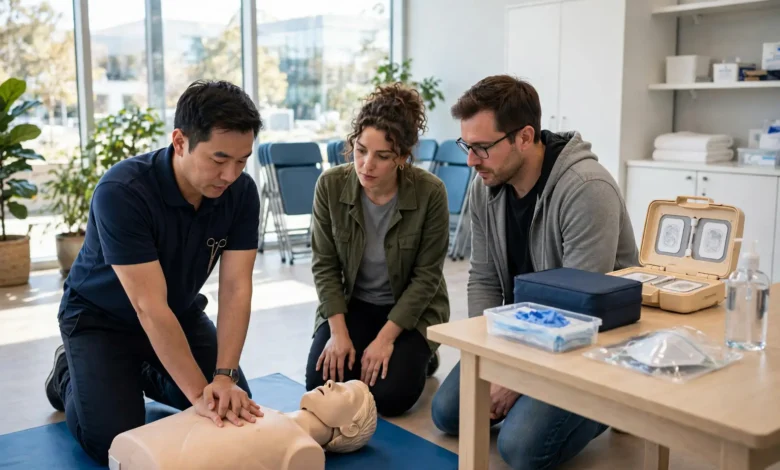
Finding CPR certification near me starts with one clear question: who is giving the certificate, and will the people who might rely on it accept it. The fastest reliable route is to search for a provider whose certificate comes from a recognised body such as the Resuscitation Council UK, the American Heart Association, the American Red Cross or St John Ambulance, then check the course format, length, price and renewal rules before you book. A local course with a recognised certificate is worth more than a cheaper online-only option that no employer, school or gym will accept.

This guide walks you through that whole decision, step by step, so you can book with confidence whether you need CPR for work, for a driving or childcare qualification, for volunteering, or simply to be prepared at home. You will learn what certification actually means, which formats exist, what they cost in 2026, how to check that a provider is genuinely accredited, and the questions to ask before you hand over any money. Every figure and rule in this article comes from a named source, with its date attached, because the details here can decide whether your certificate is accepted when it matters most.
What CPR Certification Actually Means
CPR certification is a formal record that you completed a recognised course and demonstrated the practical skills of cardiopulmonary resuscitation, usually including adult, child and infant CPR, AED use and the recovery position. A certificate does not make you a medical professional, and it does not turn a short course into a qualification to practise medicine, but it proves to an employer, a regulator or a venue that you were trained to a recognised standard and assessed on the day. Most certificates carry the name of the awarding body, the course title, the date you passed and an expiry date, and many are now issued digitally with a code that an employer can verify online.
It is worth understanding what a certificate cannot do, because a common misunderstanding leads people to book the wrong course. A short online-only awareness course that issues a certificate of completion is not the same as a certified CPR course with a hands-on practical assessment, and many employers and regulators will not accept it as evidence of competence. The distinction matters most for anyone who needs certification for work, such as a childcare worker, a lifeguard, a personal trainer or a healthcare assistant, where the certificate must meet a specific regulator’s standard. If you are booking for work, ask your employer or regulator exactly which awarding body and course level they require before you spend any money.
Online, Blended or In-Person: Which Format Fits You Best
CPR courses come in three formats, and the right one depends on why you need the certificate and how much time you have. A fully online course lets you study the theory at your own pace and is usually the cheapest option, but it cannot assess your chest compressions or AED technique in person, so it rarely satisfies an employer’s requirement for a practical assessment. A blended course combines online theory with a short in-person practical session, and it is the most popular format in the UK and the United States, because you study the theory at home and then demonstrate the skills on a training manikin in front of an instructor. A fully in-person course runs the whole session in a classroom, usually in a single day, and gives you the most instructor feedback and the most time to practise.
Blended courses are widely available from recognised providers in both countries. The American Red Cross describes its blended courses as roughly two to three hours of online learning followed by about one to two hours of in-person skills practice, while St John Ambulance offers blended first aid courses in the UK with a similar split between online theory and a practical session. Fully in-person courses typically run between three and six hours for basic CPR and AED training, and a full day for combined first aid and CPR. The trade-off is simple: online-only is cheapest and fastest but least widely accepted, blended is the best balance of convenience and recognition, and fully in-person gives the most hands-on practice and confidence.
How to Check a CPR Provider Is Genuinely Accredited
The single most important check before you book is the awarding body behind the certificate, because accreditation is what makes a certificate worth holding. The Resuscitation Council UK sets the standards for resuscitation training in the United Kingdom, and its guidelines underpin the courses run by recognised providers such as St John Ambulance, the British Red Cross and the Royal Life Saving Society UK. In the United States, the two most widely recognised bodies are the American Heart Association and the American Red Cross, whose courses are accepted by the vast majority of employers, schools and healthcare institutions. A provider that cannot name its awarding body clearly, or that invents a body with a similar-sounding name, is a serious warning sign.
Check the provider’s credentials in three quick steps before you pay. First, look for the awarding body’s name and logo on the provider’s website, and confirm on the awarding body’s own site that the provider is listed or approved. Second, ask the provider what practical assessment the course includes, because a recognised course must include a hands-on demonstration of chest compressions and AED use, not just a multiple-choice quiz. Third, check the certificate’s validity period and renewal rule, since a course that issues a certificate with no expiry date and no renewal requirement is unlikely to be a recognised qualification. If a provider cannot answer these questions clearly, walk away and choose a provider whose credentials you can verify.
What Does CPR Certification Cost Near Me
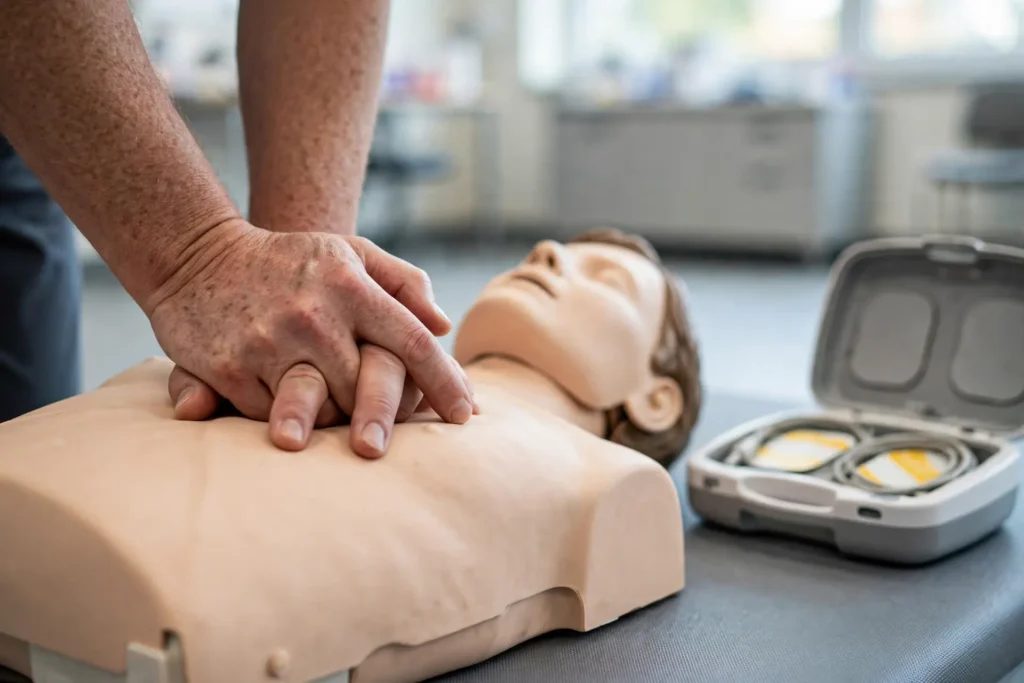
When you compare CPR certification courses near me on price, the range is wide, because the cost depends on the format, the awarding body and the provider. As a guide, online-only awareness courses are often advertised from around £25 to £60 in the UK and from around $25 to $50 in the United States, while blended courses with an in-person practical session typically cost more, and fully in-person courses are the most expensive. Industry listings as of November 2026 show UK blended first aid and CPR courses commonly priced from around £60 to £150, and United States blended CPR and AED courses commonly priced from around $75 to $100, with instructor-led classroom courses at the higher end of each range. Always compare the full price, including any booking fee, certificate fee and VAT, because a headline price that excludes the certificate can be misleading.
The price also depends on the course level, so make sure you are comparing like with like. A basic CPR and AED course of three to four hours costs less than a full one-day emergency first aid at work course that includes CPR, and a healthcare-level Basic Life Support course costs more again because it covers advanced techniques and a more detailed assessment. Group bookings, workplace courses and courses booked through a charity or community organisation are often cheaper per person than a single public place. Before you book, ask exactly what is included in the price, how long the certificate lasts, and what the renewal course costs, so you can judge the true cost over two or three years rather than just the price of the first day.
How Long Is CPR Certification Valid For
Most CPR certificates are valid for two years from the date you pass the course, although the exact period depends on the awarding body and the course level. The American Heart Association and the American Red Cross both issue CPR and AED certificates that are valid for two years, and St John Ambulance first aid certificates in the UK are valid for three years, with a recommendation to refresh the skills annually. Some employers set a shorter renewal interval of one year for staff who work in higher-risk settings, such as swimming pools, gyms and healthcare, so always check your employer’s policy as well as the certificate’s printed expiry date.
Renewal is usually quicker and cheaper than the first course, because it assumes you already know the basics and focuses on practice and updates. A renewal course typically takes two to three hours for basic CPR and AED, compared with three to six hours for a first course, and many providers offer a reduced price for returning learners. Put the expiry date in your calendar on the day you pass, and book your renewal at least a month before it runs out, because a lapsed certificate can mean you are not covered to work, and some employers will not let you start a shift until the renewal is complete.
What to Bring and Expect on the Day
A CPR course is a practical, hands-on day, and arriving prepared makes it far more useful. Wear comfortable clothes and flat shoes, because you will spend much of the session kneeling beside a training manikin on the floor, practising chest compressions and the recovery position. Bring photo ID, since many providers check your identity before issuing a certificate, and bring the booking confirmation, whether printed or on your phone. If you have any physical condition that makes kneeling or chest compressions difficult, tell the instructor at the start of the session, because they can adapt the practice or offer an alternative position.
Expect the day to be a mix of short theory sessions, demonstrations and plenty of practice. The instructor will usually start by explaining when CPR is needed and how to recognise a cardiac arrest, then demonstrate chest compressions, rescue breaths and AED use on a manikin, and then ask you to practise each skill until you are confident. Most courses end with a practical assessment in which you demonstrate the full sequence, and a short written or verbal quiz on the theory. The pass mark is designed to be achievable for anyone who has paid attention and practised, and instructors would rather coach you to a pass than fail you, so ask questions whenever you are unsure.
Conclusion
Finding a trusted CPR certification course near me comes down to three checks: the awarding body, the practical assessment and the price. Choose a provider whose certificate comes from a recognised body such as the Resuscitation Council UK, the American Heart Association, the American Red Cross or St John Ambulance, confirm that the course includes a hands-on demonstration of chest compressions and AED use, and compare the full price including the certificate and any renewal cost. Those three checks protect you from a certificate that no one will accept, and they take less than ten minutes before you book.
CPR is one of the most useful skills a person can learn, and a recognised certificate proves that you learned it properly and were assessed on the day. Book a blended or in-person course if you need the certificate for work, renew it before it expires, and practise the skills regularly so that you are ready if the moment ever comes. The course itself takes only a few hours, but the confidence it gives you lasts for years.
How long does it take to get CPR certified?
How long it takes to get CPR certified depends on the format you choose. A blended course typically involves two to three hours of online theory followed by about one to two hours of in-person skills practice, according to the American Red Cross, while a fully in-person basic CPR and AED course usually runs for three to six hours in a single session. A full one-day emergency first aid course that includes CPR takes longer, usually six to eight hours, because it covers a wider range of first aid skills. An online-only awareness course can be completed in an hour or two, but it does not include a practical assessment and is rarely accepted as certification by an employer.
The time you spend in the classroom is only part of the story, because the practical session is where you learn the skills that matter. Most instructors will let you practise chest compressions, rescue breaths and AED use until you are confident, and the final assessment usually takes fifteen to thirty minutes. If you book a blended course, allow a day or two for the online theory before your practical session, and check the provider’s instructions for how far in advance the online part must be completed. Arriving with the theory already done means you spend the classroom time on practice rather than on a screen.
Is online CPR certification accepted?
An online-only CPR certificate is rarely accepted by an employer or regulator that requires a practical assessment, because it cannot prove that you can perform chest compressions or use an AED on a real person. Most employers, schools, gyms and healthcare providers require a certificate from a course that included a hands-on practical session in front of an instructor, and that is why blended courses are the most popular option: you study the theory online and then demonstrate the skills in person. A certificate from an online-only course may be useful for personal awareness or for a family, but it should not be relied on for work.
The key question is not whether the course was online, but whether the certificate comes from a recognised awarding body and whether a practical assessment took place. The Resuscitation Council UK, the American Heart Association, the American Red Cross and St John Ambulance all require a practical demonstration for their certified courses, and their certificates are the ones most employers ask for. Before you book any course, ask the provider which awarding body issues the certificate, whether the course includes an in-person practical assessment, and whether your employer or regulator will accept that certificate. If the provider cannot answer those questions, choose a different provider.
How much does CPR certification cost?
CPR certification costs vary by format, awarding body and provider. As a guide to prices listed as of November 2026, online-only awareness courses are often advertised from around £25 to £60 in the UK and around $25 to $50 in the United States, while blended courses with an in-person practical session typically cost more, and fully in-person courses are the most expensive. UK blended first aid and CPR courses are commonly priced from around £60 to £150, and United States blended CPR and AED courses commonly from around $75 to $100, with instructor-led classroom courses at the higher end of each range. Always check whether the quoted price includes the certificate, any booking fee and VAT, because a headline price that excludes those can be misleading.
The course level also affects the price, so compare like with like before you decide. A basic CPR and AED course of three to four hours costs less than a full one-day emergency first aid at work course that includes CPR, and a healthcare-level Basic Life Support course costs more again. Group bookings and workplace courses are often cheaper per person than a single public place, and some charities and community organisations run subsidised courses. Ask the provider for the total price, the certificate’s validity period and the renewal cost, so you can judge the true cost over two or three years.
How do I find CPR classes near me?
You can find CPR classes near me by searching for a recognised provider in your area, such as St John Ambulance, the British Red Cross or the Royal Life Saving Society UK in the United Kingdom, or the American Heart Association and the American Red Cross in the United States. Start with the awarding body’s own course finder or the provider’s website, then check the course format, length, price and certificate validity before you book. Local community centres, leisure centres, schools and workplaces often host courses as well, and a search for your town plus the provider’s name will usually show the nearest sessions.
When you compare providers, look beyond the price and check three things: that the certificate comes from a recognised awarding body, that the course includes a hands-on practical assessment, and that the certificate’s validity period suits your employer’s requirements. Read recent reviews from learners in your area, and phone the provider if anything is unclear, because a short call can confirm the course level, the location and the exact start time. Book at least a few weeks ahead if you need the certificate by a deadline, since popular courses and weekend sessions fill up quickly.
How often do I need to renew my CPR certification?
Most CPR certificates need to be renewed every two years, although the exact period depends on the awarding body and the course level. The American Heart Association and the American Red Cross both issue CPR and AED certificates valid for two years, and St John Ambulance first aid certificates in the UK are valid for three years, with a recommendation to refresh the skills annually. Some employers set a shorter renewal interval of one year for staff in higher-risk settings, such as swimming pools, gyms and healthcare, so always check your employer’s policy as well as the certificate’s printed expiry date.
Renewal is usually quicker and cheaper than the first course, because it assumes you already know the basics and focuses on practice and updates. A renewal course typically takes two to three hours for basic CPR and AED, compared with three to six hours for a first course, and many providers offer a reduced price for returning learners. Put the expiry date in your calendar on the day you pass, and book your renewal at least a month before it runs out, because a lapsed certificate can mean you are not covered to work, and some employers will not let you start a shift until the renewal is complete.
