Things to Do in Atlanta GA: Georgia From Savannah to the Blue Ridge Mountains

Things to Do in Atlanta GA: A Georgia Statewide Guide From Savannah to the Blue Ridge Mountains
Things to do in Atlanta GA usually brings up the same short list of city attractions, but Georgia is a big state, and the best trip treats Atlanta as the gateway rather than the whole destination. From Atlanta you can reach the oak-shaded squares of Savannah on the coast, the wild beaches of Jekyll Island, the waterfalls and gorges of the Blue Ridge Mountains, and small towns like Helen and Blue Ridge, all in a few hours of driving. This guide covers the whole state, region by region, so you can build a real Georgia trip rather than a single-city weekend. Atlanta itself gets a short, honest section, because the Martin Luther King Jr. National Historical Park and Stone Mountain are worth your time, but the heart of this guide is the Georgia beyond the city limits: the coast, the mountains, the small towns and the food that makes the Peach State worth exploring properly.


Start on the Coast: Historic Savannah
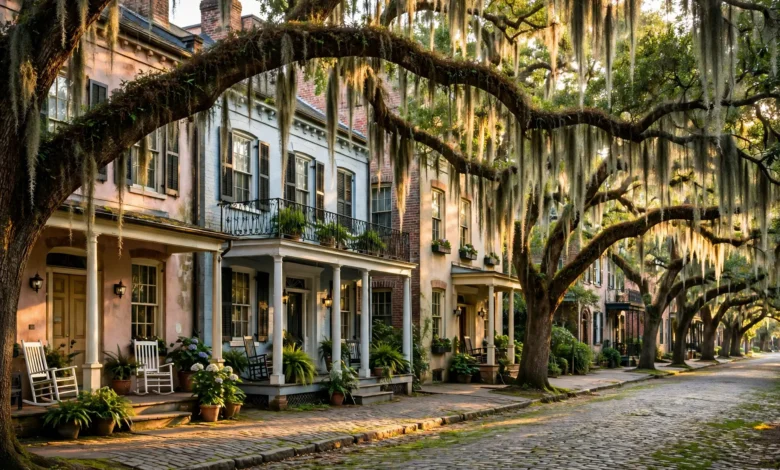
Savannah is the first place most Georgia travellers fall in love with, and it is the natural start of any statewide trip. The historic district has 22 squares shaded by live oaks draped in Spanish moss, and it is best explored slowly and on foot, with Forsyth Park as the centrepiece and its famous fountain as the classic photograph. The Owens-Thomas House tells the story of the people who were enslaved there, and it is one of several historic house museums that give the city its depth, while Bonaventure Cemetery, on a bluff above the Wilmington River, is a quiet, beautiful place to walk among old live oaks and elaborate tombs. Wormsloe Historic Site, just outside the city, has one of the most photographed roads in America, a long avenue of oaks leading to the ruins of an 18th-century estate. Savannah is also famous for its tours, from trolley and carriage rides to walking tours and ghost tours, and for its food, with River Street and the City Market offering everything from low-country shrimp and grits to pralines and pecan pie.
The practical side of Savannah is easy, which is part of its charm. The historic district is compact and walkable, and most visitors stay in or near it, so you can leave the car parked and explore on foot. The best time to visit is spring or autumn, when the weather is warm without the heavy humidity of summer, and the squares are at their greenest. If you have more than a day, take a trip to Tybee Island, Savannah’s beach town, which is friendly and a little funky, with a historic lighthouse and a pier, and a good place to swim and eat seafood without the crowds of a bigger resort. Savannah rewards slow travel, so plan at least two days, and leave room in the schedule for sitting under an oak with a coffee and watching the city go by, because that is as much a part of the experience as any attraction.
The Golden Isles: Jekyll Island, Driftwood Beach and Sea Turtles
From Savannah, the Georgia coast continues south to the Golden Isles, a chain of barrier islands that includes Jekyll Island, St. Simons Island, Sea Island and Little St. Simons Island. Jekyll Island is the most distinctive of them, and its Driftwood Beach is one of the most photographed places in Georgia, a stretch of sand scattered with sun-bleached driftwood that looks like a natural sculpture park. The island also has the Georgia Sea Turtle Center, a working hospital where you can watch injured sea turtles in recovery, and a historic district of grand old cottages from the era when the island was a private club for America’s wealthiest families. The whole island is a state park, which means it is protected from overdevelopment, and you can cycle its trails, walk its beaches and watch the sunset over the marsh without the crowds of a commercial resort.
St. Simons Island is the more lived-in of the Golden Isles, with a village, a lighthouse, restaurants and shops, and it makes a good base if you want a beach holiday with more amenities. The marshes between the islands are themselves an attraction, and kayaking through them at sunset is one of the best experiences on the Georgia coast. If you are travelling with children, the Sea Turtle Center and the beaches are the obvious draws, while couples often prefer the quiet of Jekyll Island and the restaurants of St. Simons. The Golden Isles are about a four-hour drive from Atlanta, so they work best as a two- or three-day leg of a statewide trip, paired with Savannah on the way down or back.
The Okefenokee Swamp and Wild South Georgia
In the far southeast corner of Georgia lies the Okefenokee Swamp, one of America’s great wild places, and a completely different Georgia from the coast or the mountains. It is a huge blackwater swamp, home to alligators, herons, egrets and hundreds of other species, and the best way to see it is by boat, on a guided tour or a rented canoe. The refuge runs boat tours, and there are boardwalks and trails for those who prefer to stay on dry land. Water levels vary, and low water in 2026 has closed some water trails, so it is worth asking the refuge about boat tours and paddling routes before you go. The town of Folkston, on the eastern edge of the swamp, is the usual gateway, and it has a small visitor centre and a famous train-watching platform that rail fans travel to see.
South Georgia also has its own quiet attractions that reward a slower pace. Valdosta has the Wild Adventures Theme Park, a mix of rides, animals and water slides that suits families, while the town of Thomasville, near the Florida border, is known for its rose garden, its historic downtown and its quaint bed and breakfasts. The region grows much of Georgia’s produce, and the roadside stands sell pecans, peaches and boiled peanuts in season. This is not the Georgia of postcards, but it is the Georgia that many visitors remember most fondly, because it feels unhurried and genuine, and because the landscapes, from blackwater swamps to pine forests, are unlike anything else in the state.
North Georgia: Waterfalls, Gorges and Mountain Towns
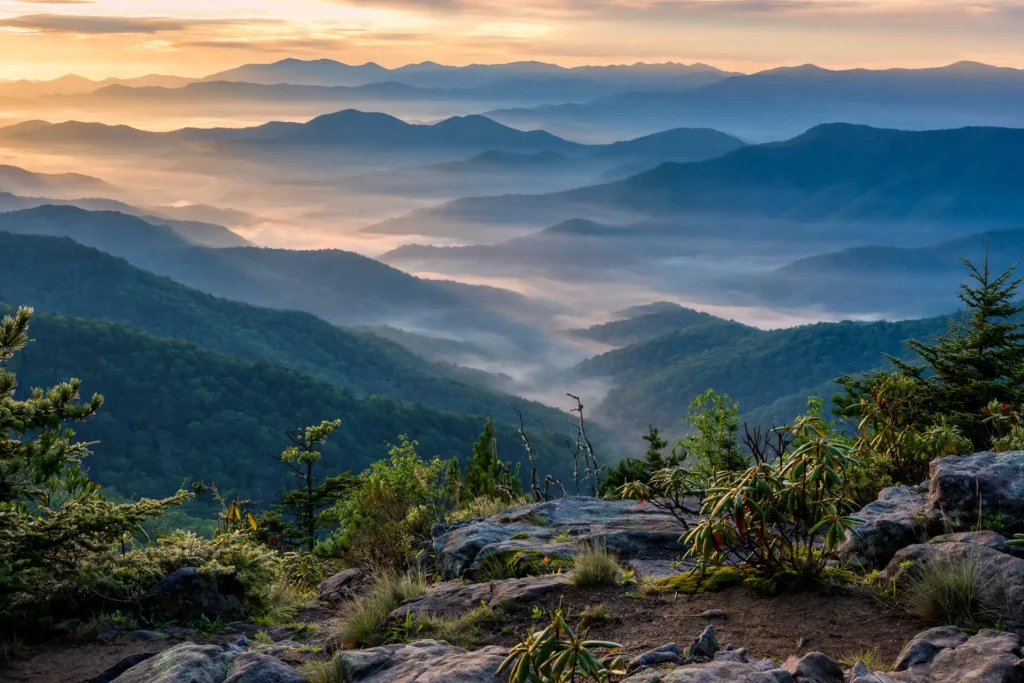
North Georgia is where the state gets dramatic, and it is the region that most rewards a few days of exploring. Amicalola Falls, near Dawsonville, is Georgia’s tallest waterfall, dropping 729 feet down the side of a mountain, and a staircase of more than 600 steps climbs beside it to the top. Tallulah Gorge, near Clayton, is about 1,000 feet deep, and its overlooks and suspension bridge give views that feel far bigger than a state park. Brasstown Bald is the highest point in Georgia, and on a clear day you can see for miles across the Blue Ridge. The Chattahoochee National Forest covers much of the region, with thousands of acres of wilderness, hiking trails and scenic drives, and the small towns of the mountains each have their own character: Helen is a Bavarian-style alpine village, Blue Ridge is a railway town with a popular scenic train, and Ellijay is known for its apple orchards.
The Blue Ridge Scenic Railway is one of the best ways to see the region, running from downtown Blue Ridge along the Toccoa River toward the Tennessee line. Because of flooding up the line, it is running only two-hour trips and holiday trains through the end of 2026, so it is worth booking ahead. Rock City, on Lookout Mountain near the Tennessee border, is an old-fashioned roadside classic, with rock formations said to be 200 million years old and a viewpoint at Lover’s Leap where, on a clear day, you can see seven states. Cloudland Canyon, on the western edge of the mountains, has deep gorges, waterfalls and hiking trails that are among the best in the state. North Georgia is at its best in autumn, when the leaves turn, and in spring, when the wildflowers bloom, but it is worth visiting in any season, and the mountain towns make comfortable bases for day trips.
Atlanta Itself: A Short, Honest Stop
Atlanta deserves a place in this guide, but it deserves an honest one, because the city is a big, sprawling place, and a day or two is enough to see its best. If your search for things to do in Atlanta GA started with the city itself, this section covers the essentials, and the rest of the guide covers the Georgia beyond it. The Martin Luther King Jr. National Historical Park, in the Sweet Auburn district, is the most important site in the city, and it includes Dr. King’s birth home, the Ebenezer Baptist Church where he preached, and his final resting place. The Georgia Aquarium, one of the largest in the world, and the World of Coca-Cola, in the same downtown area, are the two big family attractions, and both are worth a visit if you have children. The Atlanta Botanical Garden, the Fox Theatre and the restaurants and breweries along the BeltLine are the places locals actually go, and they give a better sense of the city than the tourist core. Just outside the city, Stone Mountain Park covers 3,200 acres around a huge granite dome, with a cable car to the top, a one-mile walk-up trail, and the world’s largest laser-light show in summer.
The practical advice for Atlanta is simple: stay near the BeltLine or Midtown if you want walkable restaurants and nightlife, use the MARTA train for downtown, and drive for everything else, because the city is spread out and public transport does not reach most of it. Traffic is famously bad, so plan your driving around it, and do not try to see the whole city in a day. Atlanta works best as the first or last stop on a Georgia trip, with a day for the King Park and the aquarium, and another for Stone Mountain, before you head for the coast or the mountains.
Central Georgia: Peaches, History and Small Towns
Central Georgia is often skipped, and that is a mistake, because it has some of the state’s most distinctive food and history. Georgia peaches are the state’s most famous crop, and more than 40 varieties are available from mid-May through August, with most orchards in Crawford, Peach, Taylor and Macon counties. Lane Southern Orchards in Fort Valley and Dickey Farms in Musella are two of the oldest and largest, and both welcome visitors for picking, tasting and buying. The region also grows peanuts, and boiled peanuts and peanut brittle are sold at roadside stands across central Georgia. Macon has a historic downtown and the Ocmulgee Mounds National Historical Park, with Native American earthworks that are more than a thousand years old, while Milledgeville, the former state capital, has a charming historic district. The town of Plains, home of Jimmy Carter, is a small, quiet place with a museum and a peanut-shaped water tower that has become a roadside landmark.
Central Georgia is also home to the Masters Tournament in Augusta, one of the most famous golf events in the world, held every April at Augusta National Golf Club. Tickets are famously hard to get, and the city fills up for the week, so if you are not attending the tournament, it is better to visit Augusta at another time, when you can walk the riverfront and the historic district without the crowds. The region is best explored by car, at a slow pace, with stops for peaches, peanuts and barbecue, because the joy of central Georgia is in the small things rather than the big attractions. Give it a day or two between Atlanta and Savannah, and you will see a side of the state that most visitors miss entirely.
Georgia Food: What to Eat on the Trip
No Georgia trip is complete without eating properly, and the state’s food is one of the best reasons to travel beyond Atlanta. Start with the peaches, which are at their best from mid-May through August, and try them fresh, in cobbler, in ice cream and in the peach slushies sold at orchards. Shrimp and grits is the classic low-country dish on the coast, and the best versions are in Savannah and on the Golden Isles, where the shrimp is fresh and the grits are stone-ground. Barbecue is a statewide obsession, with different regions favouring different styles, and the small roadside joints are usually better than the big restaurants. Fried chicken, collard greens, cornbread and pecan pie are the other staples, and they appear on menus from the mountains to the coast. In the north Georgia mountains, try the apple cider and the fried apple pies from the orchards around Ellijay, and in Savannah, save room for pralines and for the ice cream shops on River Street.
The practical advice is to eat where the locals eat, and to ask at your hotel or bed and breakfast for recommendations, because the best Georgia restaurants are often small, family-run places that do not advertise widely. Farmers’ markets are also worth a visit, particularly in Savannah and Atlanta, where you can buy local produce, jams, honey and baked goods. If you are travelling in summer, drink plenty of water and take it easy in the afternoon heat, because Georgia summers are hot and humid, and the best sightseeing is in the morning and evening. Food is not a side issue in Georgia, it is part of the trip, and the meals you remember will often be the ones you did not plan.
Planning Your Georgia Trip
Georgia is a bigger state than most visitors expect, and planning matters, because the coast and the mountains are four or five hours apart by road. When you plan around things to do in Atlanta GA, remember that the city is only the starting point, and the best days of the trip are usually the ones spent outside it. A good statewide trip takes seven to ten days: two days in Savannah and the Golden Isles, two days in the Blue Ridge Mountains, a day in Atlanta, and a day or two in central Georgia, with driving days in between. If you have only a long weekend, choose one region and do it properly, rather than trying to see everything, because Georgia rewards depth over breadth. The best times to visit are spring and autumn, when the weather is warm and the crowds are smaller, while summer is hot and humid, particularly on the coast, and winter is mild but can be grey in the mountains. Book accommodation ahead in Savannah and in the mountain towns, because the best places fill up, and check opening hours and water levels for the Okefenokee and the Blue Ridge Scenic Railway before you travel, because both have had restrictions in 2026.
Driving is the only practical way to see the state properly, because public transport outside Atlanta is limited, and a car gives you the freedom to stop at orchards, roadside stands and small towns. The roads are good, and the main highways are straightforward, but allow more time than the map suggests, because you will want to stop. If you are flying in, Atlanta’s airport is one of the busiest in the world and has flights from almost everywhere, and Savannah and Jacksonville also have airports that work well for a coast-first trip. Pack layers, because the mountains are cooler than the coast, bring insect repellent for the swamp and the coast, and leave room in your bag for peaches, pecans and pralines, because you will want to take some home.
Conclusion
Things to do in Atlanta GA should really be a question about the whole state, because Atlanta is the gateway, but Georgia is the trip. Savannah’s squares and Spanish moss, the driftwood beaches of Jekyll Island, the waterfalls of Amicalola Falls and the gorges of Tallulah, the small mountain towns of Helen and Blue Ridge, and the peach orchards of central Georgia together make a journey that no single city can match. Give the state a week, drive it properly, eat well, and take your time, and you will understand why people who visit Georgia once tend to come back. The Peach State is bigger, wilder and more varied than its capital suggests, and the best of it is out there on the roads between the mountains and the sea.
How Many Days Do You Need for Georgia?
A proper statewide trip takes seven to ten days, with two days on the coast, two days in the mountains, a day in Atlanta and a day or two in central Georgia. If you have only three or four days, choose one region and explore it properly, because trying to cover the whole state in a weekend means spending most of your time driving. Savannah alone deserves two days, and the Blue Ridge Mountains deserve at least two as well, so do not rush either of them.
What Is the Best Time of Year to Visit Georgia?
Spring, from March to May, and autumn, from September to November, are the best times to visit Georgia, because the weather is warm without the heavy humidity of summer, and the crowds are smaller. Autumn is particularly good in the Blue Ridge Mountains, when the leaves turn, and spring is the best time for the gardens and squares of Savannah. Summer is hot and humid, especially on the coast, while winter is mild, with the mountains cooler than the rest of the state.
Is Savannah Worth Visiting?
Yes, Savannah is one of the most rewarding cities in the American South, and it is worth at least two days. Its historic district has 22 squares shaded by live oaks, its architecture is beautiful, its food is excellent, and its pace is slow enough to enjoy properly. The best way to see it is on foot, starting with Forsyth Park and the squares, and adding a tour, a visit to Bonaventure Cemetery and a trip to Tybee Island if you have time.
Can You Do Georgia Without a Car?
It is very difficult to see Georgia properly without a car, because the coast, the mountains and the small towns are spread out and public transport outside Atlanta is limited. Atlanta itself has the MARTA train for downtown, and Savannah’s historic district is walkable, but to reach Jekyll Island, the Okefenokee Swamp, Amicalola Falls or the Blue Ridge Mountains you need a car. Renting one at Atlanta airport or in Savannah is straightforward, and driving is the only practical way to explore the state.
What Food Is Georgia Famous For?
Georgia is famous for its peaches, which are in season from mid-May through August, and for low-country dishes such as shrimp and grits on the coast. Barbecue, fried chicken, collard greens, cornbread and pecan pie are staples across the state, and boiled peanuts are sold at roadside stands everywhere. The same advice applies when you plan things to do in Atlanta GA: eat where the locals eat, because the best food is often found in small, family-run restaurants and at farmers’ markets, so ask locals for recommendations rather than relying on the big tourist restaurants.