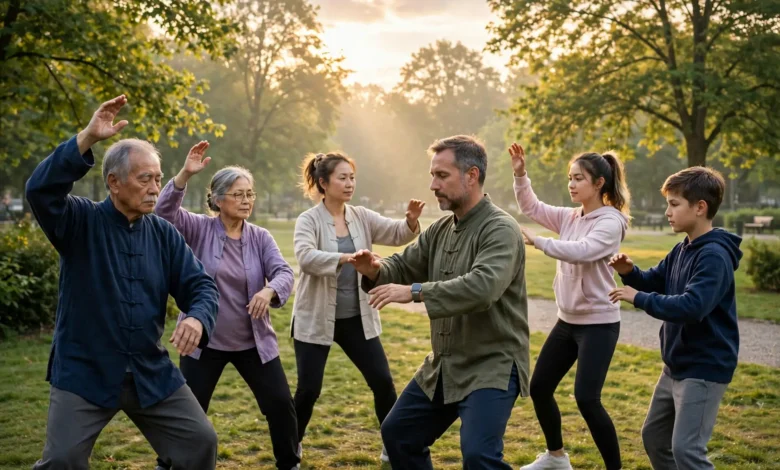
Tai Chi Near Me: How to Find Beginner Classes, Costs and Benefits
Tai chi near me is a search that grows more popular every year, and it is easy to see why. Tai chi is a gentle, flowing exercise from China that combines slow, deliberate movements with deep breathing and focused attention, and it is often described as meditation in motion. It asks almost nothing of your joints, it needs no special equipment, and it can be practised by people of almost any age and fitness level, including older adults and people living with long-term health conditions. Research from Harvard Medical School and other institutions shows that regular tai chi improves balance, reduces falls, eases arthritis pain, lowers blood pressure and lifts mood. This guide explains what tai chi is, where to find classes near you, what they cost, what to expect at your first class, and how to tell a good teacher from a poor one.

What Is Tai Chi and Why Do People Practise It?
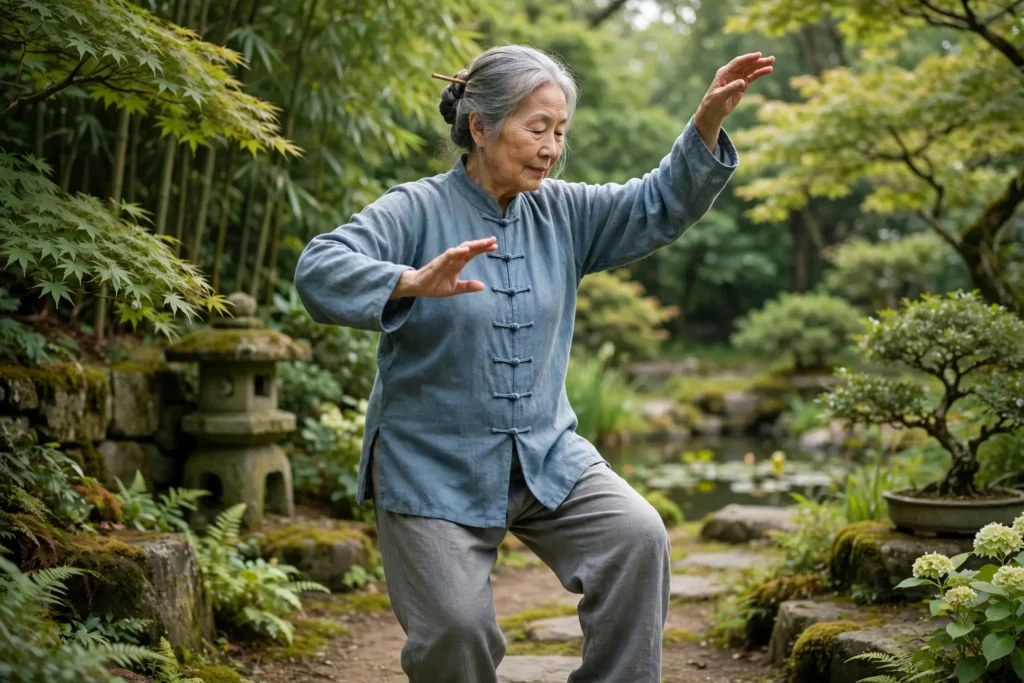
Tai chi, also spelled taiji or taijiquan, began centuries ago in China as a martial art, and over time it developed into a health practice built around slow, continuous movements that flow from one posture into the next. A typical session involves a series of named movements, performed standing, with the weight shifting smoothly from one leg to the other while the arms trace wide, unhurried arcs. The breathing is slow and deep, the mind stays focused on the movement, and the whole practice has a meditative quality that calms the nervous system. Harvard Medical School has called tai chi medication in motion, because its effects reach across balance, strength, flexibility, heart health and mood at the same time. Unlike high-impact exercise, tai chi is kind to knees, hips and backs, which is why so many people start it in their fifties, sixties and beyond, and why doctors often recommend it to people who find other exercise painful or intimidating.
The practice comes in several styles, and knowing the names helps you choose a class that suits you. Yang style is the most common in the West, with broad, open movements that are easy to follow and gentle on the body. Chen style is older and more athletic, with occasional bursts of speed and coiling movements, and it suits people who want more of a physical challenge. Wu and Hao styles use smaller, more compact movements and a greater emphasis on internal awareness. Most beginner classes teach a short Yang-style form, often 24 movements, which takes a few months to learn and can be practised in about 10 to 15 minutes a day once you know it. You do not need to choose a style before your first class, because a good teacher will start you with the basics and explain the differences as you go, and the health benefits come from regular practice rather than from any single style.
What Are the Benefits of Tai Chi?
The best-documented benefit of tai chi is balance, and the evidence here is unusually strong. Harvard Medical School reports that older adults who practise tai chi for an hour, one to three times a week, are 43 percent less likely to fall and cut their overall risk of injury by half, and a review by the National Center for Complementary and Integrative Health found about 20 percent fewer people falling compared with control groups. The reason is that tai chi trains exactly the abilities that keep you upright: leg strength, flexibility, range of motion, reflexes and awareness of where your feet are, all of which decline with age. The slow, deliberate footwork brings more attention to the soles of the feet and to changes in ankle angle and weight distribution, so your body relearns how to catch itself before a stumble becomes a fall. For anyone who worries about falling, or who has already had a fall, that alone is a powerful reason to try it.
The benefits reach well beyond balance, and the research covers a surprisingly wide range of conditions. Tai chi has been shown to help with high blood pressure and other heart-related conditions, and Harvard notes that it lowers blood pressure and total cholesterol, reduces chronic inflammation and tones the nervous system. It eases pain from osteoarthritis and fibromyalgia, improves sleep quality, and helps people with Parkinson’s disease move more steadily. The meditative side of the practice reduces stress, anxiety and depression, and in 82 percent of studies reviewed, tai chi was shown to improve mood. It also supports mental sharpness, and there is evidence that it can reduce age-related cognitive decline. One instructor at the Harvard-affiliated Massachusetts General Hospital has described seeing people improve their balance and stability, and walk faster and farther, after only 12 weeks of practice. Tai chi is not a cure for any condition, and it should never replace medical treatment, but as a complement to normal care it has an unusually broad and well-supported record.
Where Can I Find Tai Chi Classes Near Me?
Finding tai chi near me is easier than most people expect, because classes run in a wide range of community settings rather than only in specialist studios. The best places to look first are senior centres, community centres, the YMCA, health clubs, hospitals and parks departments, because many of them run regular tai chi groups, and some offer them free or at very low cost. Many cities also have free outdoor tai chi groups in public parks, often meeting early in the morning, where anyone can join without booking. Martial arts schools and dedicated tai chi studios offer more structured teaching, usually in small groups of 6 to 15 students, with private lessons available if you want individual attention. A good starting point is to search online for tai chi classes near you, then check your local council, parks department or community centre noticeboard, because many of the best groups advertise locally rather than online.
If you cannot find a class nearby, or if getting to one is difficult, online options are a genuine alternative, though they work best once you have had at least a few in-person lessons. Many respected teachers offer video courses and live online classes, and there are free introductory videos from health organisations that teach the basic movements safely. The advantage of an in-person class is that the teacher can correct your posture, which matters more in tai chi than in most exercise, because small errors in alignment can reduce the benefit and even cause discomfort. If you do start online, choose a teacher who explains each movement slowly, shows it from more than one angle, and warns you about common mistakes, and treat the first few weeks as learning rather than exercise. Either way, the key is regularity: even five minutes most days is better than an occasional long session, and Harvard advises beginners to start with 10 or 15 minutes and build gradually.
How Much Do Tai Chi Classes Cost?
Tai chi is one of the cheapest forms of exercise you can take up, and that is part of its appeal. When you look for tai chi near me online, compare a few options before you book, because prices and class sizes vary more than most people expect. Harvard Health reports that where fees are charged, classes typically cost around 10 to 20 dollars per hour, with many community and senior-centre classes at the lower end of that range or free. A typical class lasts about an hour, and many teachers let you pay by the week or month, or offer a package of classes at a discount. As an example, some studios charge around 20 dollars for a drop-in class, 60 dollars for four classes, or about 12 dollars per class on a multi-class weekly package, while private lessons typically cost 60 to 75 dollars an hour. Free options are common too: parks groups, library programmes, hospital wellness programmes and some assisted-living facilities offer tai chi free to residents and sometimes to the wider community. When you compare prices, ask what is included, because a slightly more expensive class with a qualified teacher and a small group is usually better value than a cheap class with 40 people and no individual attention.
The only equipment you need is loose, comfortable clothing and supportive flat shoes such as trainers, and many people practise barefoot indoors, so there is no expensive kit to buy. That keeps the total cost of starting tai chi close to zero, which is rare for any exercise. If you are on a tight budget, ask your local senior centre, community centre or parks department first, because they often run subsidised classes, and check whether your health insurer or local health service offers any wellness vouchers. Some employers and health plans also include tai chi in their wellness programmes. The important thing is not to let cost stop you from trying, because a free park group can be just as good a start as a paid studio class.
What Happens at a Beginner Tai Chi Class?
A beginner tai chi class is usually calm, welcoming and much less intimidating than people expect, and knowing what happens takes away most of the nerves. You will normally arrive to find a group standing in loose rows, and the teacher will begin with a few minutes of gentle warm-up, loosening the neck, shoulders, waist and ankles, and practising slow breathing. Then the teacher demonstrates a movement, breaks it into small steps, and the group follows along, repeating it several times before moving on. You will not be expected to remember everything, and nobody will single you out for getting it wrong. Most teachers encourage you to move at about 70 percent of your maximum effort and range of motion, and never to force a position, because tai chi is built on relaxation rather than effort. A typical class lasts about an hour, and it usually ends with a few minutes of quiet standing or slow breathing.
There are a few practical things worth knowing before your first class. Wear loose, comfortable clothing that lets you move freely, and flat shoes with thin soles, or be prepared to go barefoot if the class is indoors. Bring a bottle of water, and tell the teacher about any health conditions, joint problems or medicines that cause dizziness, because a good teacher will adapt movements for you. If you have a medical condition, check with your doctor first, and do not use tai chi to postpone evaluation of a medical problem. You do not need to be flexible, fit or young to start, and you do not need any experience of martial arts. Most people feel a little awkward for the first few weeks, and that is completely normal, because the movements are unfamiliar to everyone at first. The awkwardness passes quickly, and most people find the slow, rhythmic movement surprisingly absorbing once they settle into it.
Tai Chi or Yoga: Which Is Better for Beginners?
Tai chi and yoga are often mentioned together, because both combine movement, breathing and attention, but they suit different people and different needs. Tai chi is practised standing, and it focuses on flowing weight shifts, balance and coordination, which makes it particularly strong for fall prevention and for people who find getting down onto a mat difficult. Yoga includes floor work, stretching and holding postures, and it is usually better for flexibility and for building strength in a wider range of positions. Both lower stress and improve mood, and both are gentle enough for beginners. If your main goal is balance and steadiness on your feet, tai chi is usually the better choice, while if your main goal is flexibility and core strength, yoga may suit you better. There is no rule against doing both, and many people do, because they complement each other well. If you want a stronger workout to pair with tai chi, a simple strength routine is a good complement, and our guide to how the military press muscles worked in a typical session explains one of the classic upper-body exercises.
The practical differences matter too. Tai chi classes are often cheaper and more widely available in community settings, and they need no mat or equipment. Yoga classes are more common in gyms and studios, and they often have a wider range of styles, from gentle restorative yoga to vigorous vinyasa. Both practices reward patience, and neither gives instant results, so the best choice is usually the one you enjoy enough to keep doing. Try a class of each if you can, and pay attention to how you feel afterwards rather than to which one looks more impressive. The exercise that works is the one you actually do, week after week, and for many people that turns out to be tai chi.
How to Choose a Good Tai Chi Teacher
A good tai chi teacher makes the difference between a practice you love and one you abandon, so it is worth choosing carefully. Look for a teacher with several years of experience and a clear lineage, meaning they can say who taught them and in which style, and who is happy to answer questions about their background. A good teacher explains the purpose of each movement, corrects posture gently, adapts movements for people with limited mobility, and never pushes you into pain. They should also be willing to let you watch or try a class before you commit to paying, and they should be clear about prices and schedules. Be cautious of anyone who makes grand health claims, promises to cure specific conditions, charges large sums upfront for a long course, or treats the class as a test of loyalty rather than a learning environment. A genuine tai chi teacher is patient, modest and focused on your progress, not on their own status.
It is also worth asking about the class itself, not just the teacher. A group of 6 to 15 students is ideal, because the teacher can give everyone some individual attention, while a very large group usually means less correction and slower progress. Ask whether beginners are mixed with advanced students or taught separately, because a dedicated beginners’ group is usually easier to follow. Ask whether the class is mainly for health and relaxation or for martial arts, because the emphasis changes the teaching, and most beginners want the health side. And ask about the atmosphere, because tai chi should feel calm and welcoming, and if a class feels tense, competitive or cliquey, there are plenty of others to try. The right class is out there, and finding it is worth a little patience.
Conclusion
Tai chi near me is a search worth following up, because few exercises offer so much for so little cost and effort. The evidence for better balance and fewer falls is strong, with older adults who practise regularly being 43 percent less likely to fall, and the wider benefits for blood pressure, mood, sleep, arthritis pain and mental sharpness are well supported by research. Classes typically cost 10 to 20 dollars an hour, and free groups exist in parks and community centres, so money is rarely a barrier. Start with a beginner class at a senior centre, YMCA, community centre or local studio, wear comfortable clothes, tell the teacher about any health conditions, and give it a few weeks before you judge it. Tai chi rewards patience, and the people who stick with it usually find that the slow, quiet practice becomes one of the most valuable parts of their week.
Is Tai Chi Good for Seniors?
Yes, tai chi is one of the best exercises for older adults, and Harvard Medical School calls it safe, accessible and enjoyable for seniors. For seniors searching for tai chi near me, a community-centre or YMCA class is usually the best first step, because the groups are welcoming and the pace is gentle. Its greatest benefit for older people is a reduction in falls, because it trains leg strength, flexibility, range of motion and reflexes together, and studies show that older adults who practise for an hour, one to three times a week, are 43 percent less likely to fall. It also helps with blood pressure, arthritis pain, sleep and mood, and it can be adapted for people with limited mobility, including seated versions. As with any new exercise, check with your doctor first if you have a medical condition, and tell the teacher about any problems with balance or dizziness.
How Long Does It Take to Learn Tai Chi?
Learning the basic movements of a short tai chi form usually takes a few months of weekly classes, and most people feel comfortable with the sequence after about 12 weeks of regular practice. That does not mean you need to wait months to benefit, because the balance and relaxation effects begin much sooner, and some people notice better stability within a few weeks. Tai chi is a practice rather than a course with a finish line, so there is always more depth to explore, but the short 24-movement Yang form is a complete practice in itself and can be done in 10 to 15 minutes a day once learned. The key is regularity rather than speed, and even five minutes most days is better than none.
Can Tai Chi Help With Back Pain?
Tai chi can help with some kinds of back pain, particularly pain linked to stiffness, poor posture and weak core muscles, because the slow movements stretch and strengthen the muscles that support the spine. Research has found that it eases pain from arthritis and fibromyalgia, and many people with chronic back pain report that regular practice makes daily movement easier. It is not a treatment for serious spinal conditions, slipped discs or nerve problems, and you should not use it to delay medical assessment. If you have back pain, tell your teacher, move gently, never force a position, and check with your doctor or physiotherapist before starting.
What Should I Wear to Tai Chi?
Wear loose, comfortable clothing that lets you move freely, and flat, supportive shoes such as trainers with thin soles, because tai chi involves slow weight shifts and turning on the feet. Many people practise barefoot indoors, which is fine if the floor is suitable. Avoid tight clothing, high heels, heavy boots or slippery soles, because they make balance harder and increase the risk of a stumble. Bring a bottle of water, and dress in layers if the class is outdoors, because you warm up slowly and the early morning can be cool. There is no special uniform and no equipment to buy.
Is Tai Chi a Martial Art or Exercise?
Tai chi began as a martial art in China, and its movements still contain self-defence applications, but most classes today teach it as a health and wellness exercise. The martial side, including push hands and applications, is taught in some schools, but a typical community class focuses on the flowing form, breathing and balance. If you are interested in the martial aspect, ask the teacher, because some schools teach it and others do not. For most beginners, the health benefits are the reason to start, and the martial history is simply interesting background.