Car Wrap Near Me: How to Find a Trusted Local Wrap Shop
If you are searching for a car wrap near me, the short answer is that the best local wrap shop is not necessarily the cheapest one, but the one with a clean workshop, trained installers, quality vinyl film and a portfolio of finished cars you can inspect in person. A good wrap transforms the look of your car and protects the original paint underneath, while a bad wrap peels at the edges, bubbles within weeks and can damage the paint when it is removed. This guide explains how to find a trustworthy installer near you, what a wrap should cost, which questions to ask before you book, and the warning signs that should send you to the next shop on the list.
What Is a Car Wrap and Why Do Drivers Choose One?
A car wrap is a large sheet of coloured or printed vinyl film that is applied over a car’s original paintwork, changing its appearance without the permanence or cost of a respray. Drivers choose wraps for many reasons, including a new colour, a matte or satin finish, a business livery, or protection for the paint underneath against stone chips and sunlight. A full colour-change wrap covers the whole car, while a partial wrap covers only the bonnet, roof, mirrors or other chosen panels, and both options are reversible if the film is removed correctly by a professional. Modern vinyl films from established manufacturers are designed to last several years outdoors, and they can be removed without damaging factory paint that is in good condition.
The popularity of wrapping has grown sharply in recent years, and with it the number of shops offering the service, which is why a car wrap near me search now returns everything from dedicated wrap studios to general body shops and mobile installers working from a van. That variety is good news for choice, but it also means quality varies widely, and the difference between a careful installation and a rushed one is visible from several metres away. The film itself matters, because premium vinyl from brands such as 3M and Avery Dennison is engineered to conform to curves, resist fading and remove cleanly, while cheap unbranded film can shrink, crack and leave adhesive residue. The installer matters even more, because even the best film will fail if it is stretched too far, cut carelessly or applied to a dirty surface.
How to Find a Good Car Wrap Shop Near You
The best way to find a good car wrap near me is to start with local recommendations and then verify the shop yourself before you commit any money. Ask in local car clubs, online owner groups and among friends who have had wraps done, because a personal recommendation from someone whose car still looks good a year later is worth more than any advert. Check the shop’s online reviews across more than one platform, looking for recent reviews with photos of finished cars rather than a handful of old five-star ratings with no detail. A shop that is proud of its work will have a portfolio of recent jobs, and many will invite you to visit the workshop to see cars in progress.
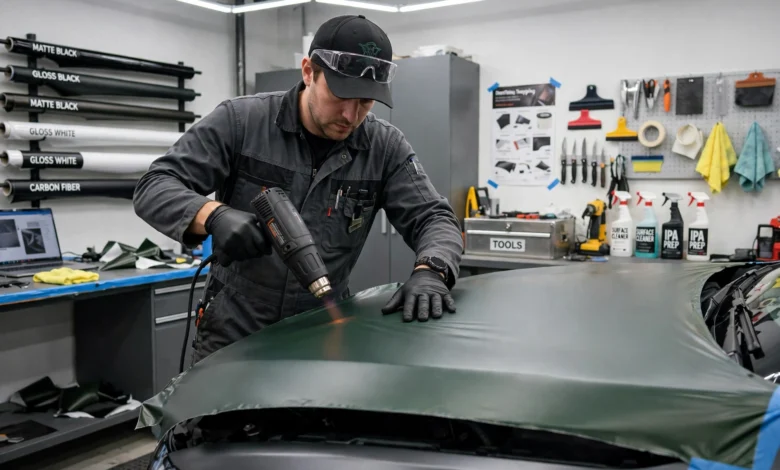
When you visit, pay attention to the workshop itself, because the environment tells you a great deal about the standard of work. A professional wrap studio is clean, well lit, dust-controlled and large enough to fit your car with room to work around it, while a dusty open unit or a driveway installation is a warning sign, since dust trapped under vinyl causes bubbles and lifting edges. Ask how long the installers have been wrapping, whether they have manufacturer training, and which brands of film they use, and be wary of any shop that cannot name its film supplier or refuses to show you material samples. The answers to these questions, together with what you see with your own eyes, will tell you more than any price quote.
What Does a Car Wrap Cost Near You?
As of November 2026, a full colour-change wrap for a typical family car generally costs in the region of one thousand five hundred to three thousand five hundred pounds or dollars, depending on the size of the car, the type of film and the quality of the installer. Smaller cars and simpler gloss colours sit at the lower end of that range, while larger vehicles, chrome or colour-shift films, and complex shapes with many curves sit at the higher end. A partial wrap, such as a bonnet, roof or mirrors only, costs considerably less, often a few hundred, and is a popular way to change a car’s look without committing to a full wrap. These are general market ranges rather than fixed prices, and a quote from a reputable shop will always be itemised so you can see what is included.
Several factors move the price up or down, and understanding them helps you judge whether a quote is fair. The film brand is one of the biggest factors, since premium films cost the installer more but last longer and remove more cleanly, while budget films keep the quote low but carry a higher risk of fading and peeling. The condition of your paint is another factor, because a wrap cannot hide dents, rust or flaking lacquer, and a good installer will insist on correcting or at least disclosing paint defects before wrapping. Removal of badges, trims and handles, and the time needed to wrap door shuts and recesses properly, also add labour, and shops that quote very low prices often skip these steps. That is why a suspiciously cheap quote should make you ask what has been left out, rather than celebrate the saving.
What Questions Should You Ask Before You Book?
Before you book a car wrap near me, ask the installer a short list of questions that separate professionals from chancers. First, ask which brand and range of vinyl they will use, and whether it is a cast film designed for vehicle wrapping rather than a cheaper calendared film meant for flat signs. Cast films conform to curves and last longer, while calendared films are more likely to shrink back from edges over time. Second, ask how long the job will take, because a proper full wrap usually takes three to five working days, and any shop promising a full wrap in a single day is almost certainly cutting corners on preparation, drying or finishing.
Third, ask what warranty is offered on both the film and the workmanship, and get it in writing, because reputable installers typically guarantee their work for at least a year and the film manufacturer may guarantee the material for several years. Fourth, ask whether door shuts, recesses and edges will be wrapped, since these details are what make a wrap look like paint rather than a sticker. Fifth, ask to see a car they wrapped more than a year ago, or at least photos of one, because a wrap that still looks good after a year of weather and washing is the best proof of quality. Finally, ask how the car should be prepared, because most shops will want the car washed and may charge extra for decontamination or paint correction if the paintwork needs it.
Warning Signs of a Bad Wrap Shop
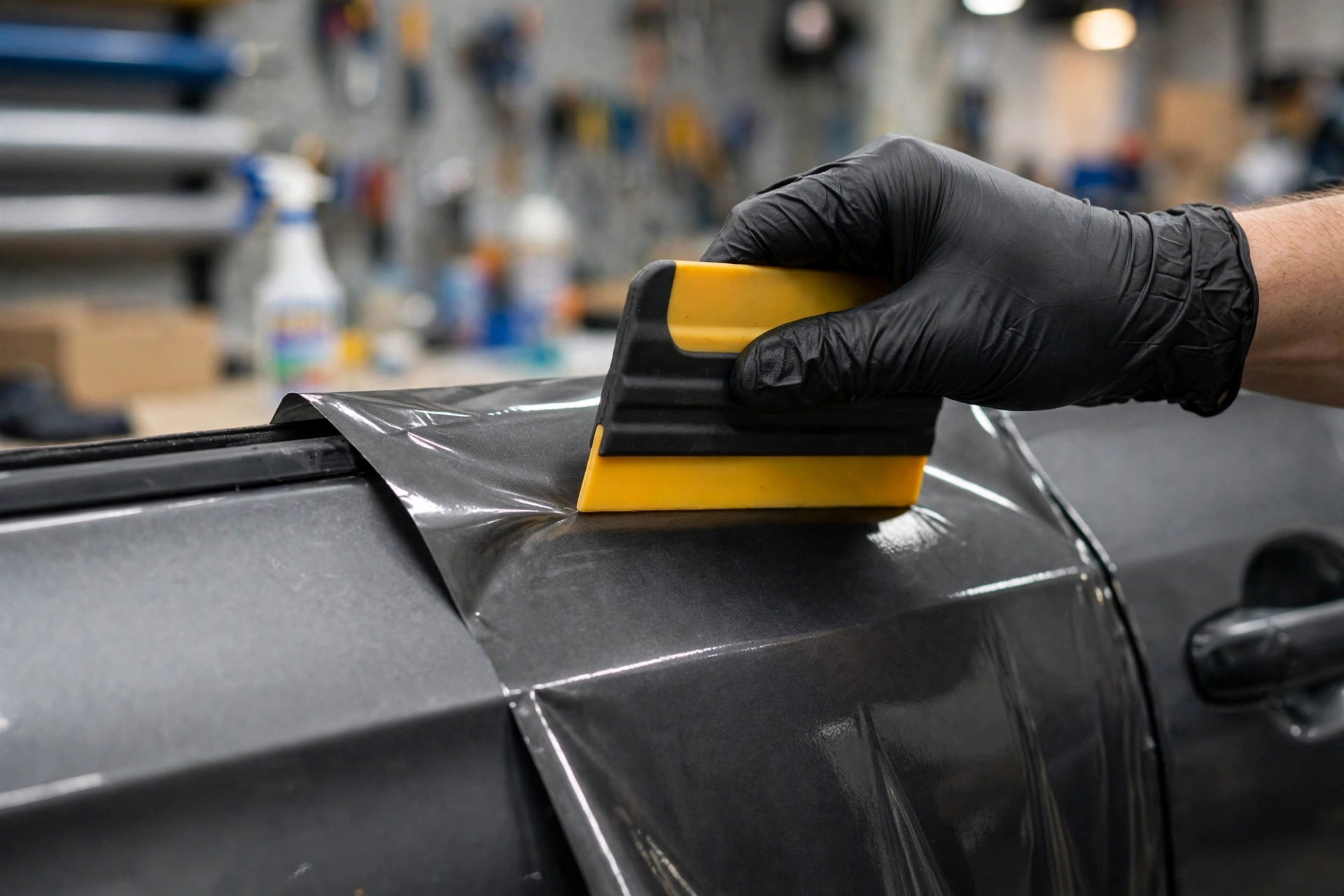
There are several warning signs that should make you walk away from a car wrap shop, however attractive its price may be. The clearest sign is a workshop that is dirty, cramped or open to the weather, because vinyl applied in a dusty environment will trap particles under the film and develop bubbles within days. Another sign is an installer who will not show you examples of finished work, or whose portfolio consists only of stock photos taken from the internet rather than cars they wrapped themselves. A shop that pressures you to pay in full upfront, offers no written warranty, or cannot tell you which film it uses is also a shop to avoid, since these are the behaviours of businesses that do not expect you to come back.
Other warning signs are subtler but just as telling. If a shop quotes a full wrap at a price far below every other quote in your area, it is almost certainly using cheap film, skipping preparation, or rushing the installation, and the wrap is likely to fail early. If the installer says door shuts and recesses do not matter, or that the wrap will hide dents and scratches, they are either inexperienced or dishonest, because a wrap follows the shape of what is underneath and makes defects more visible rather than less. And if a shop has no fixed address, no reviews and no way to contact it after the job, you will have no comeback if the wrap peels. Trust your instincts during the visit, because a professional studio feels organised and transparent, while a poor one feels evasive.
How Long Does a Car Wrap Last and How Do You Look After It?
A professionally installed car wrap using quality vinyl typically lasts between five and seven years with normal use, according to guidance from film manufacturers as of November 2026, although the actual lifespan depends on the film type, the climate and how the car is cared for. Cars parked outdoors in strong sunlight will see their wraps fade faster than cars kept in a garage, and horizontal surfaces such as the bonnet and roof age faster than vertical panels. Matte and satin finishes need more careful cleaning than gloss finishes, because harsh chemicals and abrasive washing can damage their surface. The good news is that a wrap that is looked after properly will keep its colour and finish for years, and it will protect the paint underneath from stone chips, bird droppings and ultraviolet light.
Looking after a wrap is straightforward once you know the rules. Wait at least a week after installation before washing the car, so the adhesive has time to bond fully, and then wash it by hand with a gentle car shampoo and a soft mitt rather than a high-pressure jet wash aimed at the edges. Avoid automatic car washes with stiff brushes, and never use solvents, petrol or abrasive polishes on the film. Fuel spills should be wiped off immediately, because petrol can damage vinyl, and bird droppings should be removed promptly for the same reason. If an edge does lift, take the car back to the installer quickly rather than pulling at it yourself, because a small repair is cheap while a torn panel is not.
Can a Car Wrap Damage Your Paint?
A car wrap applied and removed correctly should not damage factory paint that is in good condition, and in fact the wrap protects the paint from chips and sunlight while it is on the car. Problems arise mainly when the paint underneath is already damaged, because vinyl can lift flaking lacquer or poorly repaired paint when it is removed. That is why a good installer inspects the paint before wrapping and warns you about any areas that are at risk, and why a wrap is not recommended on a car with rust, peeling clear coat or recent cheap paint repairs. The film itself is designed to release cleanly with gentle heat, and a professional removal takes a few hours and leaves the original paint intact.
There are also legal and practical points to remember before you wrap your car. In the United Kingdom, a colour change must be reported to the DVLA so the vehicle’s registration record is updated, and your insurer must be told as well, because a wrap counts as a modification and failing to declare it can affect a claim. The same principle applies in the United States, where insurers generally want to know about modifications that change the vehicle’s appearance or value. A wrap does not usually need planning permission or any other approval, but a business livery with advertising may be subject to local rules. Checking these points before you book avoids paperwork problems later.
Conclusion
Searching for a car wrap near me is only the first step, and the real work is choosing an installer whose workshop, portfolio and warranty give you confidence. The cheapest quote is rarely the best value, because a wrap that peels in six months costs far more than a proper installation that lasts five years. Visit the shop, ask which film they use, check their finished work, and get the warranty in writing before you pay anything. If you do that, a wrap can transform your car’s appearance, protect its paint and be removed cleanly when you are ready for a change, which is exactly what a good wrap should do.
How Much Does a Car Wrap Cost Near Me?
A full colour-change car wrap for a typical family car generally costs between £1,500 and £3,500 or the equivalent in dollars as of November 2026, depending on the car’s size, the film type and the installer. Partial wraps for a bonnet, roof or mirrors cost considerably less, often a few hundred. The final price depends on the film brand, the condition of your paint, and whether door shuts and recesses are wrapped, so always ask for an itemised written quote before booking.
How Long Does a Car Wrap Last?
A professionally installed car wrap using quality vinyl typically lasts five to seven years with normal use, according to film manufacturers. Cars kept outdoors in strong sunlight age faster, and horizontal panels such as the bonnet and roof fade before vertical ones. Hand washing with gentle shampoo, avoiding high-pressure jets aimed at edges, and keeping fuel and bird droppings off the film all help a wrap reach its full lifespan.
Will a Wrap Damage My Car’s Paint?
A wrap applied and removed by a professional should not damage factory paint in good condition, and it protects the paint from stone chips and sunlight while it is fitted. Damage usually happens only when the paint underneath is already flaking, rusty or badly repaired, because the vinyl can lift weak paint when removed. A good installer inspects the paint first and warns you about any areas at risk before wrapping.
Can I Wrap My Car Myself to Save Money?
Wrapping a car yourself is possible for small panels such as a roof or mirrors, but a full car wrap is a skilled job that needs a clean dust-free space, heat guns, specialist tools and practice. DIY wraps often show bubbles, stretched film, cut marks and lifting edges, and mistakes can damage the paint. For a full wrap, a professional installer is almost always better value than a DIY attempt that has to be redone.
Do I Need to Tell My Insurer About a Car Wrap?
Yes, you should tell your insurer about a car wrap, because it counts as a modification that changes the vehicle’s appearance and sometimes its value. In the United Kingdom you must also notify the DVLA if the wrap changes the car’s colour, so the registration record stays accurate. Failing to declare a modification can affect an insurance claim, so it is worth a quick call to your insurer before the work is done.