Cheap Tires Near Me: How to Find Quality Budget Tyres Without the Risk
If you are searching for cheap tires near me, the short answer is that good budget tyres do exist, but the cheapest price on the shelf is rarely the cheapest deal once fitting, safety and lifespan are counted. A genuinely good cheap tire is a new, correctly sized tyre from a recognised budget brand, fitted by a reputable local garage, with plenty of tread and a recent manufacture date. The tyres to avoid are old, damaged or mismatched ones sold at a tempting price, because a tyre failure at motorway speed can cost far more than the money saved. This guide explains where to look, what a fair price looks like in 2026, and the checks that separate a real bargain from a false economy.


What Does Cheap Tires Near Me Actually Mean?
When drivers type cheap tires near me into a search box, they usually mean one of three things, and knowing which one you mean changes where you should shop. Some drivers want the lowest possible price for a basic replacement tyre on an older car, others want a good-value tyre from a known mid-range brand, and a third group wants a premium-brand tyre at a discounted price through a sale or price-match deal. Each of these is a reasonable goal, but they lead to very different shops, and the cheapest quote for a no-name tyre is not comparable with a discounted price for a tyre that will last forty thousand miles. Being clear about your own priority before you start ringing round saves time and stops you comparing prices that are not really comparable.
The word cheap also hides an important distinction between the price of the tyre itself and the total cost of getting it onto your car. A tyre advertised at a very low price may come with separate charges for fitting, balancing, a new valve, disposal of the old tyre and wheel alignment, and those extras can add a large amount to the final bill. A slightly more expensive tyre from a garage that includes fitting and balancing in one quoted price can easily work out cheaper overall. That is why the smartest way to use a cheap tires near me search is to ask every garage for the same thing, which is the total drive-away price for the tyre fitted, balanced and with the old tyre disposed of, so that every quote you compare is genuinely like for like.
Where Can You Find Cheap Tires Near You?
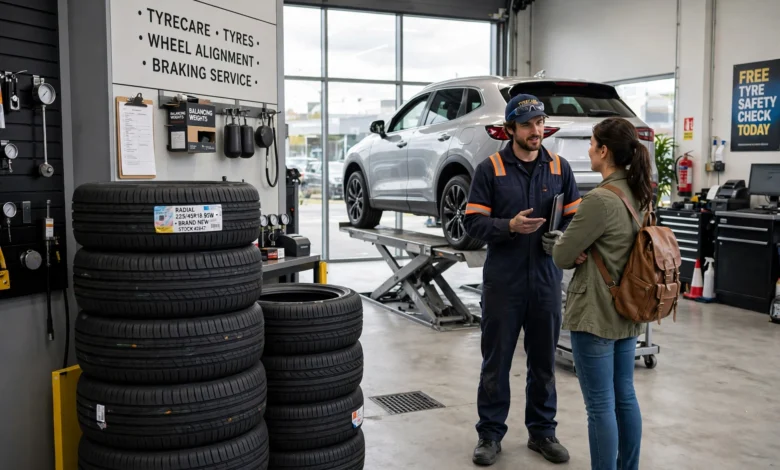
The most reliable places to find cheap tires near me are local independent tyre garages, national tyre chains running promotions, and online tyre retailers that let you buy the tyre online and have it fitted at a partner garage nearby. Independent garages often have the sharpest prices on budget brands because they buy in bulk and keep their overheads low, and they can usually fit tyres the same day if you ring ahead. National chains are worth checking too, because they run regular offers such as buy three get the fourth free or discounts on pairs, and their prices are usually published online so you can compare before you leave the house. Online retailers add a third option, letting you compare dozens of brands and prices in minutes and then choose a local fitting centre, which is often the best way to find a good tyre at a genuinely low price.
There are also places that look cheap but deserve caution, and knowing the difference protects both your wallet and your safety. Scrapyards, auction sites and private sellers can offer very low prices, but a tyre bought this way may be old, damaged, previously repaired or even the wrong size, and you will have no warranty if it fails. Part-worn tyres, which are used tyres sold second-hand, are legal in many places only if they meet strict conditions, including a minimum tread depth and no visible damage, yet enforcement is patchy and some sellers ignore the rules. If you are considering a used tyre, ask to see the DOT manufacture date stamped on the sidewall, check the tread depth yourself, and walk away from any tyre with cracks, bulges or repairs on the sidewall, because no saving is worth a blowout.
How Much Should Cheap Tires Cost in 2026?
As of November 2026, a new budget tyre for a typical family car in a common size such as 205/55 R16 usually costs somewhere in the region of forty to eighty pounds or dollars per tyre before fitting, depending on the brand and where you live. Mid-range tyres from brands with stronger test results generally start a little higher, while premium brands can cost twice as much again or more, which is why the gap between a budget tyre and a premium tyre for the same car can be surprisingly large. Smaller tyres for city cars cost less, and larger tyres for SUVs, vans and performance cars cost considerably more, so the size printed on your current tyre sidewall is the first thing to check before you compare any prices. Fitting typically adds a further amount per tyre, and balancing and a new valve are usually included in a proper fitting service.
The fairest way to judge whether a price is genuinely cheap is to compare the same tyre size and the same brand across at least three sellers, including one online retailer, because prices for identical tyres can vary by twenty percent or more between garages in the same town. Be suspicious of any quote that is dramatically lower than every other quote for the same size, since it may be for an old tyre, a different load rating, or a price that excludes fitting. Also remember that tyre prices move with the seasons, with winter tyres and all-season tyres often discounted in spring and summer tyres discounted in autumn, so timing your purchase can save real money. A driver who plans ahead and buys before the tread reaches the legal limit almost always pays less than a driver who needs a tyre urgently on a Saturday morning.
Are Cheap Tires Safe? What to Check Before You Buy
A cheap tire can be perfectly safe, provided it is new, correctly sized, undamaged and made by a manufacturer that meets recognised safety standards. The tyre industry has a wide range of budget brands, and while the cheapest unknown brands sometimes perform poorly in independent wet-braking tests, many budget and mid-range tyres perform well within acceptable limits and carry the same safety markings as premium tyres. The important checks are the same whatever the price, and they start with the size, load index and speed rating printed on the sidewall, which must match your vehicle manufacturer’s recommendation. A tyre with the wrong load index or speed rating may look identical but can overheat or fail under load, so never accept a tyre that does not match your car’s specification.
The second safety check is the age of the tyre, which is shown by the four-digit DOT code on the sidewall, where the first two digits are the week and the last two are the year of manufacture. A tyre made more than five or six years ago has rubber that has already begun to harden, even if it has never been used, and most manufacturers recommend replacing tyres after ten years at the latest regardless of tread depth. The third check is a visual inspection for cracks, cuts, bulges or uneven wear, all of which are warning signs that should make you reject a tyre immediately. The US National Highway Traffic Safety Administration (NHTSA) publishes clear guidance on tyre safety and ageing, and its advice is a useful reference for any driver buying budget tyres.
New, Used or Part-Worn: Which Cheap Option Makes Sense?
For most drivers, a new budget tyre is the best value cheap option, because it comes with a full tread depth, a known manufacture date and a warranty, and its cost per mile is usually lower than a used tyre that is already half worn. A new tyre with eight millimetres of tread will typically last tens of thousands of miles with normal driving, while a part-worn tyre with only three or four millimetres of tread remaining may need replacing within a year, which means buying twice and paying fitting twice. When you work out the cost per thousand miles rather than the price on the day, the new budget tyre often wins, and it also removes the uncertainty about the tyre’s history, since you cannot know whether a used tyre has hit a pothole, been run flat or been badly repaired.
There are narrow situations where a used or part-worn tyre can make sense, such as a very old car that will soon be scrapped, or a temporary spare to get you to a garage, but even then the tyre must pass strict checks. In the United Kingdom, part-worn tyres must legally have at least two millimetres of tread across the whole tread, no cuts larger than twenty-five millimetres, no bulges or exposed cords, and a permanent mark showing they have been inspected. In practice, many part-worn tyres sold at the roadside do not meet these rules, and testing by consumer groups has repeatedly found dangerous examples on sale. If you do buy part-worn, buy only from a reputable dealer who shows you the inspection mark, and treat the tyre as a short-term solution rather than a long-term bargain.
How to Check a Tire Before You Pay for It
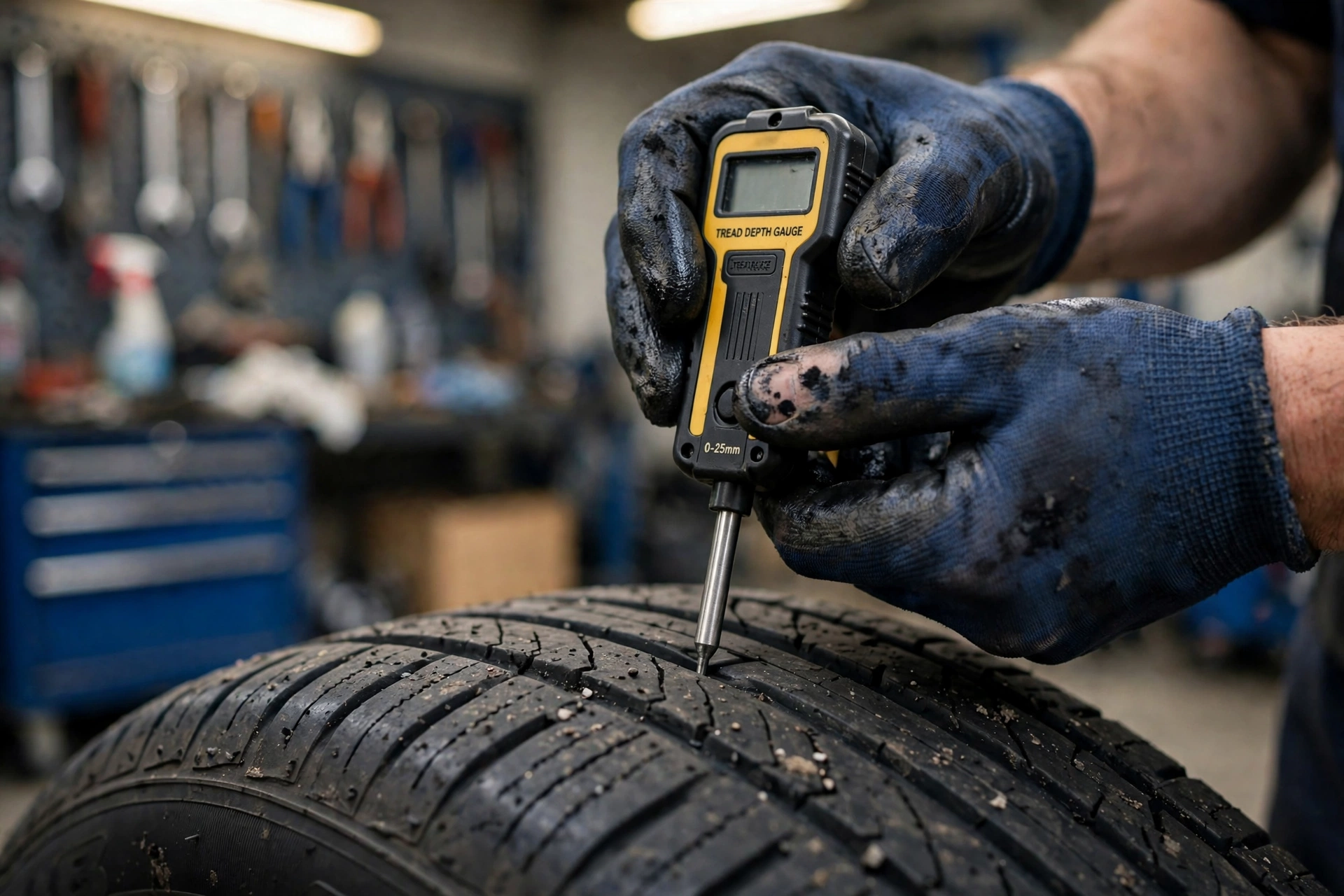
Before you pay for any cheap tire, spend two minutes checking it yourself, because a quick inspection can catch problems that a low price is hiding. Start with the tread depth, which you can measure with a twenty-pence coin or a proper tread depth gauge, and remember that the legal minimum in the UK and much of Europe is one point six millimetres, while safety experts recommend replacing tyres at three millimetres because wet grip falls sharply below that level. Look across the whole width of the tread for uneven wear, which can signal alignment or suspension problems on the car the tyre came from, or a manufacturing fault. Then check the sidewall on both sides for cracks, scuffs, bulges or repairs, and reject any tyre with a bulge, since a bulge means the internal structure is damaged and the tyre could fail without warning.
Next, read the DOT date code and the size, load and speed information moulded into the sidewall, and compare them with your car’s handbook or the plate inside the driver’s door. The four-digit date code tells you the week and year the tyre was made, and you should be cautious about any tyre more than a few years old, even if it looks new. Also check that all four tyres on your car are a sensible match, because mixing very different brands, tread patterns or wear levels across an axle can upset handling and braking, especially in the wet. A good local garage will walk you through these checks without being asked, and a seller who rushes you or refuses to let you inspect the tyre is a seller to avoid. A full vehicle inspection also covers tyre condition, tread and pressures, which is why many drivers combine a tyre change with a wider check of the car.
Hidden Costs That Turn a Cheap Tire Expensive
The price of the tyre itself is only part of what you pay, and the hidden costs are where a cheap deal often stops being cheap. Fitting usually costs extra per tyre, and a proper fitting service includes removing the old tyre, fitting the new valve, balancing the wheel and disposing of the old tyre responsibly. Some garages quote a low tyre price and then add each of these as a separate charge, while others quote a single fitted price that covers everything, so always ask for the total before you agree. Wheel alignment is another cost that is sometimes presented as essential and sometimes genuinely needed, and it is worth paying for if your old tyres wore unevenly, but it is not automatically required with every tyre change.
There are also costs that arrive later if the cheap tyre wears quickly or performs poorly. A tyre with a soft compound or a poor tread design may wear out in half the mileage of a better tyre, which means buying again sooner and paying fitting again. Poor wet grip can also increase stopping distances, and while that is primarily a safety issue, it is also a financial one if it contributes to an accident. The fairest comparison is therefore the total cost over the life of the tyre, including fitting and the expected mileage, rather than the price on the day. When you compare on that basis, the cheapest tyre on the shelf is often not the cheapest tyre to own, and a mid-range tyre bought at a discount is frequently the best value of all.
How to Make Cheap Tires Last Longer
Once you have found good cheap tires near me and had them fitted, a few simple habits can add thousands of miles to their life and protect the money you saved. The most important habit is checking tyre pressures at least once a month and before any long journey, because under-inflated tyres wear faster at the edges, use more fuel and run hotter, while over-inflated tyres wear faster in the centre and give a harsher ride. Your car’s correct pressures are printed on a plate inside the driver’s door or fuel filler cap, and they are different for a fully loaded car, so check them when the tyres are cold for an accurate reading. A small digital pressure gauge costs very little and pays for itself quickly.
The second habit is rotating your tyres between the front and rear axles every five to eight thousand miles, or as your car manufacturer recommends, because front tyres usually wear faster than rear tyres on most cars. Regular rotation evens out the wear and helps all four tyres reach the end of their life together, which also makes it easier to replace them as a set. The third habit is driving smoothly, since hard acceleration, heavy braking and fast cornering all scrub rubber off the tread, while gentle driving and looking ahead can add a large amount of life to any tyre. Finally, have your wheel alignment checked if you notice the car pulling to one side or the steering wheel sitting off-centre, because misalignment can destroy a new tyre in a few thousand miles.
Conclusion
Finding cheap tires near me is not about chasing the lowest number on a price board, but about finding a safe, correctly sized tyre from a trustworthy local seller at a fair total price including fitting. The best approach is to compare the same size across at least three sellers, check the tyre’s age and condition before you pay, and judge value by cost per mile rather than the price on the day. New budget tyres from recognised brands usually offer the best balance of safety and value, while part-worn tyres should be treated with caution and bought only from reputable dealers who can prove they have been inspected. Keep your pressures correct, rotate your tyres and drive smoothly, and the money you save on the purchase will last as long as the tyres themselves.
How Can I Tell If a Cheap Tire Is Safe?
A cheap tire is safe if it is new or properly inspected, the correct size, load index and speed rating for your car, recently manufactured according to the DOT date code, and free of cracks, bulges, cuts or uneven wear. You should also check that the tread depth is well above the legal minimum of 1.6 mm, because safety experts recommend replacing tyres at 3 mm when wet grip begins to fall sharply. A tyre that fails any of these checks is not a bargain at any price, and a reputable seller will let you inspect the tyre before you pay.
Is It Better to Buy Cheap Tires Online or at a Local Garage?
Buying cheap tires near me online usually gives you the widest choice and the easiest price comparison, but you still need a local garage to fit them, and the fitting cost must be added to the online price. A local garage may charge slightly more for the tyre itself but often includes fitting, balancing and disposal in one quoted price, and it can fit the tyres the same day. The best approach is to compare the total fitted price from both routes for the same tyre size and brand, and to choose the option that is cheapest overall rather than cheapest on the tyre alone.
How Long Do Cheap Tires Last?
A new budget tyre typically lasts between 20,000 and 40,000 miles depending on the car, the driving style and how well pressures and alignment are maintained, according to tyre industry guidance as of November 2026. Cheap tires wear faster when pressures are wrong, when the wheels are misaligned, or when driving is aggressive, and a part-worn tyre with only 3 to 4 mm of tread left may last less than a year. Regular pressure checks, tyre rotation and smooth driving are the simplest ways to make any tyre, cheap or premium, last longer.
What Is the Legal Minimum Tread Depth?
In the United Kingdom and much of Europe, the legal minimum tread depth for car tyres is 1.6 mm across the central three-quarters of the tread and around the entire circumference. In the United States, most states also use 2/32 of an inch, which is about 1.6 mm, as the minimum. Safety experts and motoring organisations recommend replacing tyres at 3 mm, because braking distances in wet conditions increase sharply below that level, and driving on tyres below the legal limit can result in fines and penalty points.
Should I Replace All Four Tires at Once?
You do not always need to replace all four tires at once, but tyres on the same axle should always be replaced as a pair so that braking and handling stay balanced. If only one tyre is worn or damaged, replacing the pair on that axle is the usual advice, and the new tyres should go on the rear axle for stability. Replacing all four at once makes sense when all four are near the end of their life, because it keeps grip even and lets you take advantage of offers such as discounts on sets of four.