
Self Service Dog Wash: How to Wash Your Dog Without the Mess at Home
A self service dog wash is a pay-to-use washing station, usually found at a pet shop, a petrol station, a laundrette, or a dedicated pet wash business, where you wash your own dog in a raised tub with professional shampoo, warm water, and a high-velocity dryer, and you leave the mud, the hair, and the mess behind when you go. It gives you the equipment of a professional groomer without the price of a full grooming appointment, and it saves your bathroom from the familiar chaos of a wet dog shaking water across the tiles. This guide explains how it works, what it typically costs, what to bring, how to wash your dog step by step, and how to keep the whole experience calm and safe for nervous or large dogs.

The idea is simple but the difference it makes is real, because washing a medium or large dog at home often means lifting a slippery animal into a bath, chasing it around a small room, and then cleaning up a flood of water and hair afterwards. A self service station solves all three problems at once: the tub is raised to waist height so your back stays comfortable, the dog is secured with a short lead or harness point, and the floor is designed to drain, so the mess stays at the station rather than coming home with you. Most stations are coin or card operated and take around 10 to 20 minutes per wash, which makes them a practical option after a muddy walk, a beach trip, or a roll in something unpleasant.
What Is a Self Service Dog Wash?
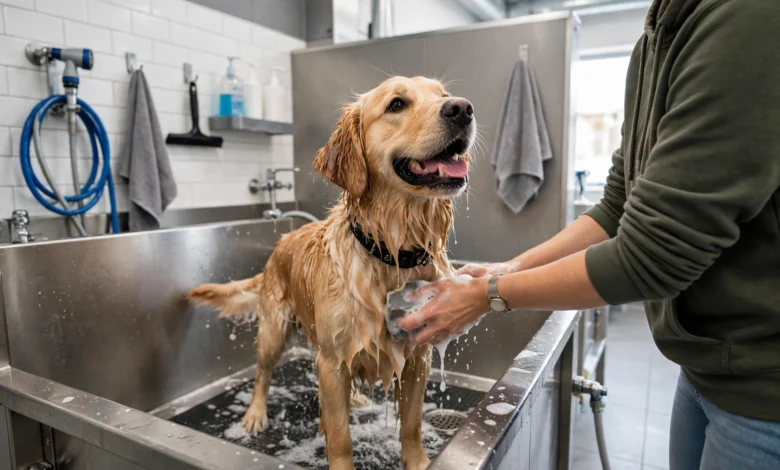
It is a DIY grooming station where you do the washing yourself using professional-grade equipment provided on site, and it sits somewhere between washing your dog at home and booking a full professional groom. The station usually consists of a raised stainless steel or fibreglass tub with a non-slip floor, a handheld shower head with warm water, built-in dispensers for shampoo and conditioner, and a high-velocity dryer for finishing, all housed in a small room or a covered outdoor bay. Some stations are standalone machines in a pet shop or a car wash forecourt, while others are part of a larger pet wash business with several bays, seating for owners, and vending machines selling treats and towels.
The service is aimed at owners who want a proper wash without the cost of a groomer and without the mess at home, and it works for almost any breed, from small terriers to large retrievers, as long as the dog can stand in the tub safely. Most stations are open during shop hours or around the clock, and you do not normally need to book, although it is worth checking busy times, because Saturday mornings after a muddy week can mean a queue. It is not a substitute for a professional groom when your dog needs clipping, de-matting, or nail trimming, but for a routine wash it is faster, cheaper, and far less messy than doing the job in your own bath.
How Does It Work?
Using a self service dog wash is straightforward, and most stations work in the same way whether they are coin operated, card operated, or app based. You start by paying for a set amount of time, usually in blocks of 5 or 10 minutes, and the timer begins when you activate the station, so it is worth having your dog ready and your supplies in hand before you start the clock. You then lift your dog into the tub, secure it with the short lead or harness attachment provided, and use the controls to select shampoo, rinse, or conditioner, with warm water coming from a handheld shower head that you can aim exactly where you need it.
The shampoo is usually dispensed automatically when you select the wash cycle, which means you do not need to bring your own unless your dog has sensitive skin or a vet-recommended product, and the water temperature is preset to a comfortable warm setting so you do not have to adjust it yourself. After rinsing, you switch to the dryer, which is a powerful blower that removes most of the water from the coat in a few minutes, although long-haired dogs will still need a towel finish and a brush at home. When the timer ends, you towel your dog down, give the tub a quick rinse with the shower head, and leave the bay clean for the next owner, which is simply good manners and is expected at most stations.
How Much Does It Cost?
The price of a self service dog wash varies by location, operator, and how long you take, so treat any figure as a guide and check the price board at the station before you start. As a broad range, a typical session in the UK costs around £5 to £12 for 10 minutes, with some stations charging by the minute and others offering a flat rate for a full wash and dry, and prices in city centres or at premium pet wash businesses can be higher. In the United States, a session commonly costs roughly $10 to $20, with some operators charging by time and others by dog size, and a few stations offer loyalty cards or memberships that reduce the cost if you wash your dog every week.
Compared with a professional groom, which can cost several times more and needs an appointment, it is good value for a routine clean, especially if you have a short-haired dog that only needs washing and drying. The main cost to watch is time, because a nervous or long-haired dog may need two time blocks, which doubles the price, so it helps to be organised and to practise the routine at home first so you move efficiently. Some stations also sell towels, shampoo upgrades, or flea treatments at the till, and those extras are optional, so you can keep the cost down by bringing your own towel and sticking to the standard shampoo included in the price.

What Should You Bring With You?
Most stations provide the essentials, including shampoo, warm water, and a dryer, but bringing a few of your own items will make the wash smoother and more comfortable for your dog. Start with a towel or two, because even the best dryer leaves a damp dog, and a quick towel rub before and after drying removes far more water than the blower alone, while a spare towel for the car protects your seats on the way home. Bring your dog’s lead and collar, or a harness if that is what your dog is used to, and any treats you need to reward calm behaviour, since a small treat after each stage turns the wash into a positive experience rather than a chore your dog dreads.
If your dog has sensitive skin, allergies, or a skin condition, bring the shampoo your vet recommended, and ask the staff whether you can use your own product in the station, because most operators are happy to let you do so. A brush or comb is useful for long-haired breeds, since brushing out tangles before the wash stops them tightening into mats when the coat gets wet, and a plastic bag for used towels or muddy wipes keeps your car clean afterwards. Finally, bring a little patience and a calm manner, because your dog takes its cues from you, and a relaxed owner with treats and a steady voice will get a far better result than a rushed owner wrestling a wet dog under a ticking timer.
How to Wash Your Dog Step by Step
Start by brushing your dog before you lift it into the tub, because removing loose hair and working through any tangles first stops the wash water from turning small knots into stubborn mats, and it also gives your dog a few minutes to settle into the new surroundings. Lift your dog into the tub using the ramp or step if one is provided, secure the short lead to the attachment point, and speak calmly while you let your dog sniff the tub and the shower head, because a dog that has had a minute to investigate is far less likely to panic when the water starts. Wet the coat thoroughly with warm water, starting at the back and working forward, and avoid spraying water directly into the ears, eyes, or nose, which most dogs dislike intensely.
Apply the shampoo and work it into a lather with your hands, paying attention to the muddy paws, the belly, and the area under the tail, and use your fingertips to massage the coat rather than your nails, which can scratch the skin. Rinse thoroughly until the water runs clear, because shampoo left in the coat can irritate the skin and make the fur look dull, and repeat the rinse if your dog has a thick or double coat that holds soap deep inside. Finish with the dryer on a low setting first, holding it at a distance and moving it steadily so the noise does not frighten your dog, then towel dry, give a treat, and check the paws and ears for any remaining dirt before you head home, where a final brush will leave the coat looking its best.
Tips for a Calm, Safe Wash for Nervous or Large Dogs
Nervous dogs need extra patience at one of these stations, and the best approach is to make the first visit a short, positive one rather than a full wash under pressure. Let your dog explore the station with the water off, reward every calm moment with a treat, and try a brief rinse of the paws only, so the dog learns that the tub is safe before you attempt a complete wash, and if your dog is still distressed, leave it for another day rather than forcing the issue. Keep your voice low and steady, avoid sudden movements, and never raise your voice or punish a frightened dog, because fear and punishment together will make the next visit harder, while patience and treats will make each visit easier than the last.
Large and strong dogs bring a different challenge, and the key is to use the ramp or step rather than lifting a heavy, slippery animal, to keep the lead short but not tight, and to stand in a stable position with your knees slightly bent so a sudden movement does not pull you off balance. If your dog is very large, very nervous, or has a medical condition such as arthritis, ask a member of staff for help or consider whether a professional groomer with a hydraulic table would be safer, because there is no shame in choosing the right setting for your dog. Always check the water temperature on your own wrist before you spray your dog, keep the dryer away from the face and ears, and watch for signs of stress such as yawning, lip licking, or a tucked tail, which are your dog’s way of telling you to slow down.
Conclusion
A self service dog wash is one of the simplest upgrades you can make to your dog-owning routine, because it gives you professional equipment, a comfortable working height, and a mess that stays at the station instead of flooding your bathroom. Prices vary by location, but a typical session costs only a fraction of a professional groom, and once you have the routine down, most dogs can be washed and dried in 10 to 20 minutes, which makes it an easy habit after muddy walks, beach days, or any adventure that ends with a dirty dog. The key is preparation: bring towels and treats, brush first, work calmly, and rinse thoroughly, and the whole experience becomes quick and stress-free for both of you.
If you have never tried one, your first visit is the perfect time to start small, let your dog explore the station, and keep the session short and positive, because a dog that enjoys its first wash will happily return for the next one. Ask staff if anything is unclear, check the price before you start the timer, and remember that the goal is a clean, comfortable dog rather than a perfect show groom, so do not chase perfection on your first attempt. With a little practice, one of these stations will save you time, money, and a great deal of cleaning up, and your dog will come home clean, dry, and ready for its next muddy adventure.
How long does a self service dog wash take?
A typical session takes around 10 to 20 minutes for a short-haired dog, including washing, rinsing, and drying, while a long-haired or large dog may take 20 to 30 minutes, especially if the coat needs a thorough rinse and a longer drying time. First-time users should allow a little extra, because you will be learning the controls and your dog will be getting used to the station, and it is better to pay for a second time block than to rush a nervous dog.
Can I use my own shampoo at a self service dog wash?
Most stations allow you to use your own shampoo, especially if your dog has sensitive skin or your vet has recommended a specific product, although you should check with the operator first because a few coin-operated machines only dispense their own shampoo through the built-in system. If your dog has a skin condition, the guidance from animal welfare organisations such as the RSPCA and the ASPCA is to use a dog-specific shampoo rather than a human product, because human shampoos can dry out or irritate a dog’s skin.
Is a self service dog wash suitable for puppies?
One of these washes can be suitable for puppies once they are old enough to be out and about and have had their vaccinations, and a short, gentle first visit is a good way to introduce a young dog to water, noise, and handling in a positive way. Keep the session brief, use warm water and a low dryer setting, reward calm behaviour with treats, and stop if the puppy becomes distressed, because a positive first experience will make every future wash far easier for both of you.
Do I need to book a self service dog wash in advance?
Most stations work on a walk-in basis and do not need a booking, because you simply pay at the machine and use the bay when it is free, although it is worth checking the opening hours and avoiding peak times such as Saturday mornings if you can. A few larger pet wash businesses do take bookings for their busiest bays, so if you are travelling to a specific station or you have a large dog that needs extra time, a quick call ahead can save you a wasted journey.
Looking after your dog goes beyond bath time — read our guide on can dogs have almonds to check which everyday foods are safe for your dog.
