Herbal Store Near Me: How to Find a Good One and Shop Safely
A herbal store near me is a shop that sells plant-based products such as dried herbs, herbal teas, tinctures, essential oils and dietary supplements, and the best way to find a good one is to look for a store that is transparent about what it sells, staffed by people who can explain products honestly, and clear about the limits of what herbal products can do. A well-run herbal store near me will tell you when a product is backed by evidence and when it is traditional use only, and it will encourage you to talk to a doctor or pharmacist before taking anything that could interact with your medicines. That honesty is the single most useful sign of a trustworthy shop, because the herbal market is lightly regulated and the quality of what is on the shelves varies enormously from one store to the next.

This guide explains what herbal stores actually sell, how to tell a good one from a poor one, what to ask before you buy, how to read labels and spot quality seals, and which safety rules matter most. It also explains the important legal fact that underpins the whole market, which is that the US Food and Drug Administration does not approve dietary supplements for safety or effectiveness before they are sold, so the responsibility for choosing safe products falls largely on the shop and on you. Everything here is general information as of November 2026, and it is not medical advice, so always speak to a healthcare professional before starting any herbal product, especially if you take prescription medicines, are pregnant, or have a long-term condition.
What Does a Herbal Store Sell
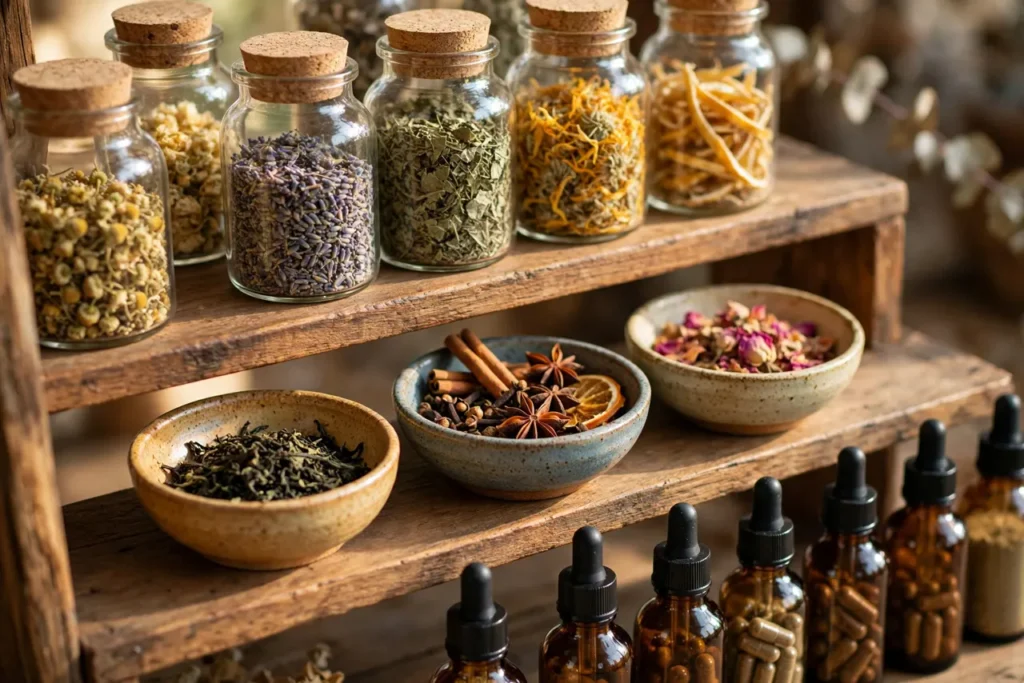
A herbal store sells plant-based products in many different forms, and understanding the range helps you work out what you actually need before you walk through the door. Most herbal stores stock dried herbs sold loose or in jars, herbal teas and blends, tinctures and liquid extracts, capsules and tablets, essential oils for aromatherapy, and salves, balms and creams for the skin. You will also commonly find vitamins, minerals, probiotics and other dietary supplements alongside the herbal range, because most herbal retailers sell a broad wellness assortment rather than herbs alone. Some stores focus on a specific tradition, such as Ayurvedic or traditional Chinese medicine, while others carry a general range covering popular herbs such as echinacea, ginger, turmeric, elderberry, garlic, ginseng, milk thistle and St John’s wort.
The key distinction to understand is that these products are sold as dietary supplements or foods, not as medicines, and that changes what the shop is allowed to claim about them. Under the Dietary Supplement Health and Education Act of 1994, supplement makers may not legally claim that a product diagnoses, cures, treats or prevents a disease, and labels may only carry health claims, nutrient content claims or structure and function claims, such as supporting normal immune function. A herbal store near me that promises to cure a named illness is either misunderstanding the law or deliberately ignoring it, and that is a reason to shop elsewhere. The honest version of the same conversation is a shop assistant explaining what an herb is traditionally used for, what the evidence does and does not show, and suggesting you check with your doctor before you buy.
How Do You Find a Good Herbal Store Near Me
Finding a good herbal store near me starts with the same approach you would use for any specialist shop, which is to check what other customers say, look at how the store presents itself, and visit once before committing to a large purchase. Search for herbal stores in your area and read recent reviews, paying attention to comments about staff knowledge, product freshness and whether the shop pressures customers into buying, because a store that pushes expensive bundles on a first visit is usually more interested in sales than in your wellbeing. A good store often has a website or social media page that lists its brands, explains its sourcing, and names the qualifications of its staff, and those details are worth a few minutes of your time before you travel.
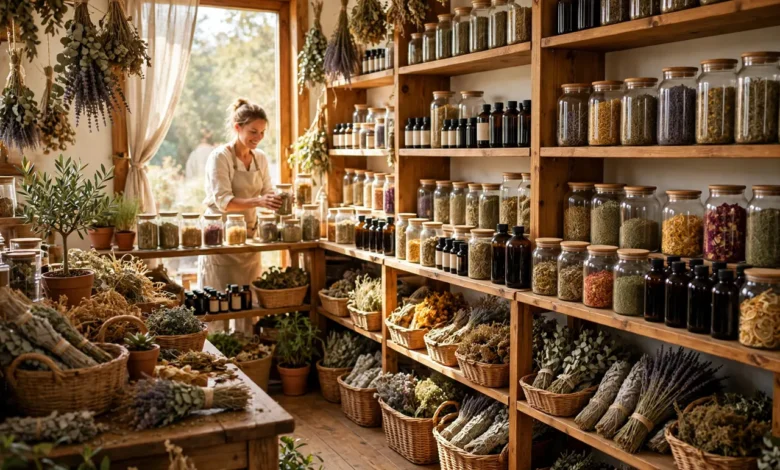
When you visit, look at the shelves with a critical eye, because the physical state of a shop tells you a great deal about how it is run. Dried herbs should be stored in sealed, labelled jars away from direct sunlight, with clear information about the plant name, the part used and the date, while oils and tinctures should be in dark glass bottles with intact seals and legible labels. Ask the staff where their herbs come from, whether they stock organic options, and how they verify the identity of what they sell, because reputable suppliers test their stock and can show certificates of analysis. A herbal store near me that cannot answer basic questions about sourcing, or that stocks dusty jars with faded labels and no dates, is a store to walk out of, however convenient its location.
What Should You Ask Before Buying Herbal Products
Before you buy anything from a herbal store, ask the staff three questions that separate a careful retailer from a careless one, and listen to how confidently and honestly they answer. First, ask what evidence supports the product for the purpose you have in mind, because a good answer distinguishes between traditional use, small studies and strong evidence, while a vague promise that it works for everything is a warning sign. Second, ask whether the product could interact with any medicine you take, because several well-known herbs do interact with common drugs, and a responsible shop will tell you to check with your doctor or pharmacist rather than guessing. Third, ask about the brand and the testing behind it, because the quality of herbal products depends heavily on the manufacturer, and a store that stocks brands with third-party quality seals is making a better choice than one that stocks the cheapest option available.
The interaction question deserves particular attention, because it is where herbal products can genuinely cause harm, and it is the reason health authorities advise talking to a healthcare professional before taking any supplement. St John’s wort, for example, is known to interact with antidepressants and can increase the risk of serotonin syndrome, while garlic, ginger and ginkgo can increase bleeding risk when taken with blood-thinning medicines such as warfarin or with common painkillers. Echinacea can affect the liver in some people, and several herbs are not recommended during pregnancy or breastfeeding. A herbal store near me that takes the time to ask about your medicines and your health before selling you something is doing its job properly, and a store that never asks is one to be cautious about, however friendly its staff may seem.
How Do You Read Herbal Product Labels
Reading the label properly is one of the most useful skills a herbal shopper can learn, because the label is where the manufacturer tells you what is actually in the bottle, and the rules about what must appear there are set by law. Dietary supplements sold in the United States must carry a Supplement Facts label that lists the serving size, the number of servings, each dietary ingredient and the amount per serving, along with a statement on the front identifying the product as a dietary supplement. The label should name the plant by its common name and its Latin botanical name, state which part of the plant is used, and give the amount of the herb or extract per serving, because two products with the same common name can contain very different amounts of active ingredient.
Beyond the required information, look for signs of independent quality testing, because the FDA has established Good Manufacturing Practices that manufacturers must follow, but it does not test products before they reach the shelves. Several independent organisations offer quality testing and allow products that pass to display a seal, including ConsumerLab.com, NSF International and the US Pharmacopeia, and a product carrying one of those seals has been checked for identity, purity, strength and contaminants. Be cautious about labels that make dramatic claims, use the word natural as if it were a guarantee of safety, or hide the ingredient list in tiny print, because natural does not mean safe, and several herbal products have been found to contain undeclared ingredients or contaminants. If a label is unclear, ask the shop to explain it, and if the shop cannot, choose a product whose label you can understand.
What Are the Risks of Herbal Products
Herbal products carry real risks that are easy to underestimate, because the word natural suggests something gentle, while many plant compounds are pharmacologically active and can have strong effects on the body. The most common problems are side effects such as rash, fatigue, nausea or diarrhoea, and the risk rises when people take high doses, combine several supplements, take supplements instead of prescribed medicines, or use products without telling their doctor. Some Ayurvedic preparations have been found to contain lead, mercury or arsenic in amounts that can be toxic, and the FDA has warned specifically about metals in some of these products, which is why the source and the manufacturer of any imported traditional preparation deserve extra scrutiny.
The interaction risk is the one that health professionals worry about most, because it is invisible until it causes a problem, and it affects people who are already taking medicines for serious conditions. Older adults, pregnant and breastfeeding women, and people taking prescription medicines are the groups most at risk of adverse effects, and the National Center for Complementary and Integrative Health advises all of these groups to be particularly careful. If you experience a bad reaction to a herbal product, stop taking it, seek medical advice, and report the event to the FDA, because reporting is how unsafe products are identified and removed from the market. A good herbal store will support that process rather than discouraging it, and will keep a record of what you bought so the product can be traced if needed.
Conclusion
A good herbal store near me is one that sells quality products, answers honest questions, and treats safety as part of the service rather than an afterthought, and the signs of that quality are visible in the shop itself. Look for clear labelling, fresh stock, knowledgeable staff who ask about your medicines, brands with third-party quality seals, and a willingness to say when a product is not right for you. Be wary of any store that promises cures, pressures you into large purchases, cannot explain its sourcing, or stocks products with vague or incomplete labels, because those are the stores most likely to sell you something that is ineffective at best and harmful at worst.
The broader lesson is that herbal products deserve the same care as any other health product, and the fact that they are sold without a prescription does not make them risk-free. Talk to your doctor or pharmacist before starting anything new, read the label every time, start with the smallest sensible amount, and keep a note of what you take so that any reaction can be traced back to a specific product. Shop slowly, ask questions, and choose the store that earns your trust with honest answers rather than the one with the loudest claims, because that is the store most likely to still be serving your neighbourhood well in years to come.
Is It Safe to Buy Herbs From a Herbal Store
Buying herbs from a herbal store can be safe when the store is reputable, the products are properly labelled, and you have checked with a healthcare professional first, but safety depends on the quality of the product and on your own health situation. The FDA does not approve dietary supplements for safety or effectiveness before they are sold, so the shop and the manufacturer carry most of the responsibility for quality. Choose stores that stock brands with third-party testing seals from organisations such as the US Pharmacopeia, NSF International or ConsumerLab.com, and always tell your doctor or pharmacist about any herbal product you take, especially if you use prescription medicines.
What Is the Difference Between Herbal Medicine and Supplements
Herbal medicine is a broad term for the use of plants to support health, and it includes traditional systems such as Ayurveda and traditional Chinese medicine as well as modern herbal practice, while a dietary supplement is a legal category defined by the Dietary Supplement Health and Education Act of 1994. A supplement is a product taken by mouth that contains a dietary ingredient such as a vitamin, mineral, herb or amino acid, and it must be labelled as a dietary supplement with a Supplement Facts panel. Many herbal products are sold as dietary supplements, which means they are regulated as foods rather than as drugs, and the manufacturer is responsible for ensuring they are safe and properly labelled.
Can Herbal Products Interact With Prescription Medicines
Yes, herbal products can interact with prescription medicines, and some of these interactions are serious enough to change how well a medicine works or to cause harm. St John’s wort can reduce the effectiveness of several medicines and can increase the risk of serotonin syndrome when combined with antidepressants, while garlic, ginger and ginkgo can increase bleeding risk when taken with blood thinners or anti-inflammatory painkillers. Always tell your doctor and your pharmacist about every herbal product and supplement you take, and ask them to check for interactions before you start anything new, because a pharmacist can often spot a problem that a shop assistant cannot.
What Should I Look for on a Herbal Product Label
Look for the plant’s common name and Latin botanical name, the part of the plant used, the amount per serving, a full Supplement Facts panel, and a quality seal from an independent testing organisation such as the US Pharmacopeia, NSF International or ConsumerLab.com. The label should also carry the manufacturer’s name and contact details, a batch or lot number, and a clear statement identifying the product as a dietary supplement. Avoid products with vague ingredient lists, dramatic cure claims, or no manufacturer details, and ask the shop to explain anything on the label that you do not understand before you buy.
Do Herbal Stores Sell Products for Specific Conditions
Herbal stores sell products that are traditionally used for many purposes, but the law does not allow dietary supplements to claim that they diagnose, cure, treat or prevent any disease, and any store that makes such a claim is breaking the rules. A responsible shop will explain what an herb is traditionally used for, what the evidence does and does not show, and will suggest you speak to a healthcare professional about your specific condition. If you have a diagnosed condition or take regular medicines, your doctor or pharmacist is the right person to advise you, not a shop assistant, however knowledgeable they may be about herbs.