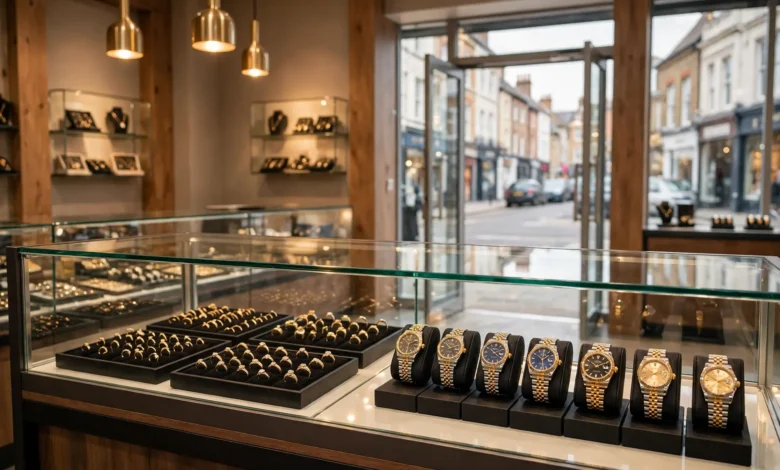
The quickest way to find pawn shops near me open now is to check the shop’s live opening hours on Google Maps or its own website, then phone ahead before you travel, because pawnbrokers keep shorter hours than most high-street shops and many close on Sundays and bank holidays. A shop that looks open online may be closed for lunch, shut early on a Saturday, or closed on a bank holiday, so a two-minute call saves a wasted journey with a valuable item in your pocket. Before you go, bring photo ID and proof of address, know roughly what your item is worth, and be ready to compare at least two offers.


This guide explains exactly how pawnbroking works in the UK, what it costs, what you can pawn, and what rights protect you if you cannot repay on time. It is written for first-timers who need cash quickly but do not want to lose a treasured item or pay far more than they expected. Every rule and figure here comes from a named source, with its date attached, and no shop name, address, price or opening time is invented, because the details that matter most are the ones that change from one street to the next.
How to Find Pawn Shops Near Me Open Now
The most reliable way to find pawn shops near me open now is to search Google Maps for pawnbrokers near your postcode and check the live “open now” status, which is usually based on the shop’s own listed hours. Cross-check that result against the shop’s own website or social media page, because Maps hours are sometimes out of date after a bank holiday or a change of ownership. Then phone the shop before you set off and confirm three things: that it is open today, that it lends against the type of item you have, and roughly what time it stops taking new pawn loans, since some shops stop valuations an hour before closing.
Do not rely on a single source, and do not travel with a valuable item unless you are confident the shop is open and willing to see you. Pawnbrokers in the UK typically trade Monday to Saturday, often from around 9am to 5pm, with shorter Saturday hours and many closed on Sundays, although the exact pattern varies by shop and by town. Named examples show the range: H&T stores in Salford and Sheffield list 9am to 5pm Monday to Saturday and closed on Sundays, while Cashoot in Kingston upon Thames lists 10am to 6pm Monday to Friday and 10am to 4pm on Saturdays, also closed on Sundays, as published on their own websites as of November 2026. Treat those as examples of typical hours, not as the hours of the shop nearest to you, and always confirm before you travel.
How Does Pawning Actually Work
Pawning is a secured loan, not a sale, and understanding that difference is the key to using a pawnbroker safely. You take a valuable item to the shop, the pawnbroker values it and offers you a loan worth a percentage of its second-hand value, and you sign a credit agreement and receive the cash plus a pawn ticket. The shop keeps your item in secure storage while the loan runs, and you get the item back when you repay the loan plus the interest. You can usually redeem it at any time during the loan period, paying interest only for the time you borrowed, and the loan does not require a credit check because the item itself is the security.
The whole process is regulated in the UK, which gives you real protection if you know your rights. Pawnbrokers must be authorised by the Financial Conduct Authority (FCA) under the Consumer Credit Act 1974, and they must give you a written credit agreement that states the interest rate, any charges and the date by which you must repay. The law gives you a minimum redemption period of six months, so the shop cannot sell your item before that period ends. Keep your pawn ticket safe, because it is your proof of the agreement, and if you lose it, ask the shop promptly about the statutory declaration process rather than waiting until the redemption date is near.
What Can You Pawn and How Much Will You Get
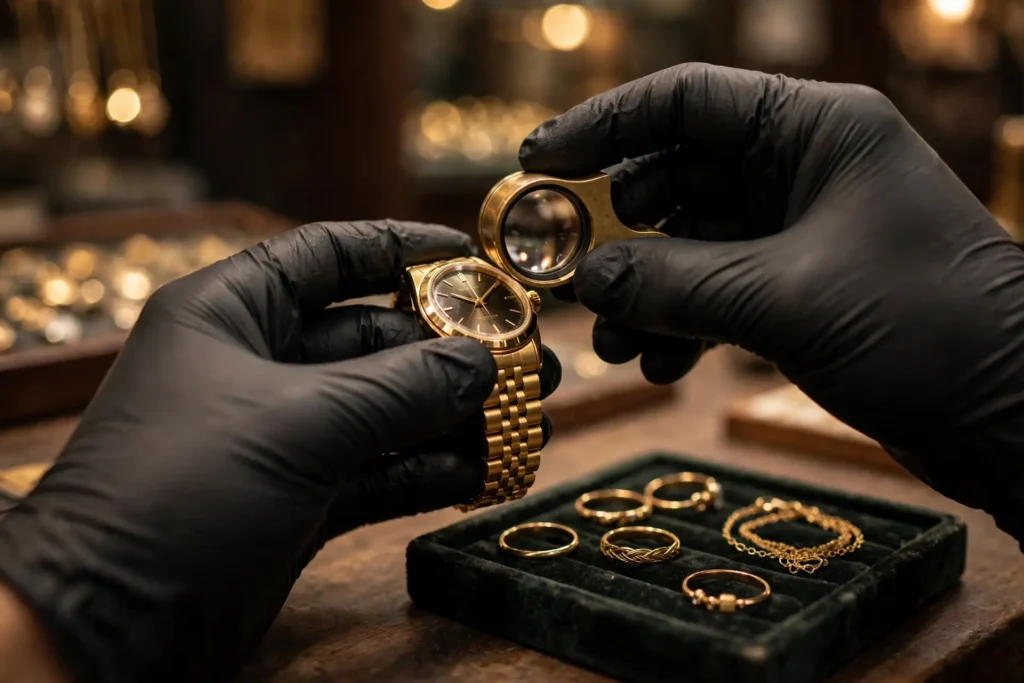
Most UK pawnbrokers lend against gold and silver jewellery, diamonds, luxury watches and, at larger shops, items such as designer goods, musical instruments, tools and electronics. Gold jewellery and watches are the most commonly accepted items, because they hold their value well and are easy for the shop to value and store securely. Some shops specialise in high-value watches and jewellery and will not take electronics at all, while others take a wider range, so it is worth phoning ahead to ask whether your particular item is something they lend against before you carry it into town.
The amount you are offered depends on what the shop could sell your item for second-hand, not on what you paid for it new. Industry guides report that pawnbrokers typically lend a percentage of the item’s resale value, often roughly a third to two-thirds of that value, depending on the item, its condition and how easily it could be resold. When you visit pawn shops near me open now, the offer will also reflect the shop’s own costs and the risk that the item is never redeemed. Bringing the original box, papers, receipts or certificates usually helps, especially for watches and diamonds, because proof of authenticity and ownership supports a stronger valuation. If the first offer feels low, you are free to walk away and try another licensed broker.
What Interest and Fees Will You Pay
Pawnbroking is convenient, but it is expensive borrowing, and the interest rate is the single most important number to understand before you sign anything. Industry guides report that UK pawnbrokers commonly charge around 3% to 10% per month, with the rate depending on the size of the loan and the individual shop, and larger loans usually attract lower monthly rates than small ones. Some high-street lenders charge annual rates as high as 150% APR, according to the pawnbroking guide published by Unbolted, so a small loan kept for the full six months can cost far more in interest than many borrowers expect. Always ask for the total amount you will have to repay, not just the monthly rate.
The credit agreement must state the interest rate, any charges and the redemption date in writing, so read it before you sign and ask the broker to explain anything that is unclear. A simple example from industry guides shows the scale: at 5% a month, a £100 loan costs £5 in interest for one month, while a £500 loan kept for six months at a similar rate would cost around £150 in interest. Most shops charge interest only for the time you actually borrow, with no early repayment fee, so redeeming after a few weeks costs much less than waiting until the end of the six-month period. If the agreement includes charges you were not told about verbally, do not sign it, and compare the total redemption figure with at least one other broker.
What ID and Paperwork Do You Need to Bring
Every legitimate UK pawnbroker will ask you for identification before lending you money, and arriving without it is the most common reason first-time customers are turned away. You will normally need one form of photo ID, such as a passport or a UK photocard driving licence, plus one proof of your current address, such as a recent utility bill, bank statement or council tax bill. Some shops accept a birth or marriage certificate plus two proofs of address if you do not have photo ID, but the exact combination varies, so phone ahead and ask what your chosen shop requires. You must also be over 18 to take out a pawnbroking loan.
Bring anything else that supports the value and ownership of your item, because it can improve the offer and speed up the valuation. For a watch, that means the original box, papers, service history and any certificate of authenticity. For jewellery, bring any valuation, receipt or hallmark information you have, and for diamonds, any grading certificate. Do not bring items you cannot prove are yours, and never pawn something that belongs to someone else without their clear permission, since the shop may ask how you came by the item. Keep a copy of everything you sign, including the pawn ticket and the credit agreement, in a safe place at home.
What Happens If You Cannot Repay on Time
If you cannot repay by the end of the redemption period, do not simply ignore the problem, because your options are best while the item is still yours. Under the Consumer Credit Act 1974, a pawn is redeemable at any time within six months after it was taken, and that period is the minimum the law guarantees. Many brokers will let you extend the loan by paying the interest owed and signing a fresh agreement, which keeps your item safe for another period. Contact the shop before the deadline, explain your situation honestly, and ask what an extension would cost in total, because a short extension is usually far cheaper than losing the item altogether.
If the loan is not redeemed and not extended, the broker may sell the item, but the law still protects you when the loan is larger than £75. For loans over £75, the broker must give you notice of the intended sale and at least 14 days to redeem the item before it is sold, and if the sale brings in more than you owe plus reasonable costs, the surplus belongs to you. For small loans of £75 or less with a six-month redemption period, ownership of the item can pass to the broker at the end of the period instead. These rules come from sections 116, 120 and 121 of the Consumer Credit Act 1974, and they are the reason you should always keep the broker’s letters and your pawn ticket until the matter is settled.
Conclusion
A pawn shop can be a fast, practical way to raise cash without a credit check, but only if you treat it as a loan with a deadline and a price, not as free money. Check that the shop is genuinely open before you travel, confirm that it is authorised by the FCA, bring the right ID, read the credit agreement, and know the total amount you must repay and the date by which you must repay it. The best time to find pawn shops near me open now is before you need the money urgently, when you still have time to compare two offers and walk away from a bad one.
Your item is only safe while the loan is within its redemption period, so put the redemption date in your calendar the day you pawn it, keep the ticket somewhere safe, and contact the broker early if you think you will need more time. Borrow only what you need, redeem as soon as you can, and remember that selling the item outright is sometimes the better choice if you do not expect to want it back. Used carefully, a pawnbroker solves a short-term problem, and used carelessly, it turns a treasured possession into a regrettable sale.
How do I find pawn shops near me open now?
You can find pawn shops near me open now by searching Google Maps for pawnbrokers near your postcode and checking the live “open now” status, then confirming on the shop’s own website and by phone before you travel. That last step matters most, because Maps hours can be out of date after a bank holiday or a change of ownership, and many pawnbrokers close on Sundays and bank holidays. When you phone, confirm the shop is open today, that it lends against your type of item, and what time it stops taking new valuations.
Most UK pawnbrokers trade Monday to Saturday, often from around 9am to 5pm, with shorter Saturday hours, but the exact pattern varies by shop and by town. Published examples as of November 2026 show H&T stores opening 9am to 5pm Monday to Saturday and closed on Sundays, while Cashoot in Kingston upon Thames opens 10am to 6pm on weekdays and 10am to 4pm on Saturdays. Never assume those hours apply to your nearest shop, and never travel with a valuable item until you have confirmed that the shop is open and willing to see you.
What do pawn shops charge in interest?
Pawn shops in the UK commonly charge around 3% to 10% per month, according to industry guides, with the exact rate depending on the size of the loan and the individual shop. Larger loans usually attract lower monthly rates than small ones, and some high-street lenders charge annual rates as high as 150% APR, according to the pawnbroking guide published by Unbolted. That makes pawnbroking one of the more expensive forms of borrowing, so always ask for the total amount you will have to repay, including interest and any charges, before you sign the credit agreement.
The agreement must state the interest rate, any charges and the redemption date in writing, and most shops charge interest only for the time you actually borrow, with no fee for redeeming early. As a rough guide from industry sources, a £100 loan at 5% a month costs £5 in interest for one month, while a £500 loan kept for six months could cost around £150 in interest at a similar rate. Redeeming after a few weeks therefore costs much less than waiting until the end of the six-month period, so repay as soon as you can.
What ID do I need to pawn something?
To pawn something in the UK you normally need one form of photo ID, such as a passport or a UK photocard driving licence, plus one proof of your current address, such as a recent utility bill, bank statement or council tax bill. Some pawnbrokers accept a birth or marriage certificate plus two proofs of address if you do not have photo ID, but the exact combination varies by shop, so phone ahead and ask what your chosen broker requires. You must be over 18 to take out a pawnbroking loan, and the shop will record your details as part of its legal obligations.
You should also bring anything that proves the value and ownership of your item, such as the original box and papers for a watch, a valuation or receipt for jewellery, or a grading certificate for a diamond. These documents support a stronger valuation and speed up the process, and they reassure the broker that the item is genuinely yours. Keep a copy of everything you sign, including the pawn ticket and the credit agreement, because the ticket is your proof of the loan and you will need it to redeem your item.
How long do I have to get my item back?
Under the Consumer Credit Act 1974, a pawn is redeemable at any time within six months after it was taken, and that six-month period is the minimum the law guarantees. You can redeem your item at any point during that period by repaying the loan plus the interest owed up to that date, and most shops charge interest only for the time you borrowed. If you need more time, many brokers will let you extend the loan by paying the interest owed and signing a fresh agreement, so contact the shop before the deadline rather than after it has passed.
If the loan is not redeemed or extended, the broker may sell the item, but for loans over £75 the law requires the broker to give you notice and at least 14 days to redeem it before the sale, and any surplus above what you owe plus reasonable costs belongs to you. For small loans of £75 or less with a six-month redemption period, ownership of the item can pass to the broker at the end of the period. Put the redemption date in your calendar on the day you pawn the item, and keep your pawn ticket safe until the loan is settled.
Is it better to pawn or sell my item?
Pawning is better if you need cash for a short time and want the item back, because you keep ownership and can redeem it at any time within the six-month redemption period by repaying the loan plus interest. Selling is better if you do not expect to want the item again, because a sale gives you the full price immediately with no interest, no deadline and no risk of losing the item for less than it is worth. The right choice depends entirely on how much the item means to you and how confident you are that you can repay the loan on time.
Before you decide, compare the two options in cash terms. Ask the broker what it would pay to buy the item outright, what it would lend against it, and what the total redemption figure would be after one month and after six months. If the total interest approaches the difference between the loan and the sale price, selling may leave you better off. Industry guides report that pawn loans are commonly a percentage of the item’s second-hand value, often roughly a third to two-thirds, so a sale usually puts more money in your hand today, while a pawn loan protects your right to get the item back.