Willow Tree Spiders Explained: Identification, Meaning, Size, and Are They Dangerous in the UK?

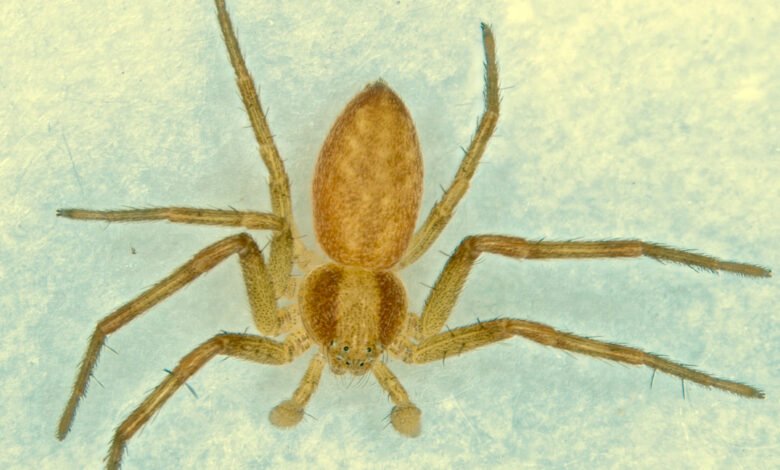
Willow tree spiders is a general search term used to describe different types of spiders commonly found living in, hunting around, or building webs within willow trees. In the UK, this phrase often appears when people notice large webs or spider activity in gardens, parks, or riverside areas. Willow tree spiders are not a single species, but a collection of common garden-dwelling spiders.


Willow tree spiders often attract attention because of the dramatic webs seen between drooping willow branches. These trees create the perfect environment for insects, which in turn attract spiders. The presence of willow tree spiders is usually a sign of a healthy ecosystem rather than a problem. Despite their appearance, they are generally harmless and play an important ecological role.
Are Willow Tree Spiders Real or Just a General Term?
Willow tree spiders are not officially recognised as one distinct species in scientific classification, which is why confusion often arises online. Instead, the term refers broadly to spiders such as orb-weavers, jumping spiders, and sheet-web builders that commonly inhabit willow trees. When people search for willow tree spiders, they are usually trying to identify any spider seen in these environments.
The popularity of the term willow tree spiders has increased due to viral images and videos showing trees covered in silk. However, these visuals often include multiple species or even non-spider causes such as caterpillars. Understanding that willow tree spiders is a descriptive phrase rather than a scientific name helps reduce misunderstanding and encourages accurate identification in natural settings.
Identification – What Do Willow Tree Spiders Look Like?
Willow tree spiders vary significantly in appearance depending on the species involved. Orb-weavers are the most commonly associated spiders and are known for their large, circular webs stretched between branches. Jumping spiders are smaller, compact, and highly active, relying on excellent vision rather than webs. This diversity often leads to misidentification among observers.
When people search for willow tree spiders pictures, they are often surprised by how different each spider looks. Some appear large due to long legs and web positioning, while others are tiny but highly mobile. In the UK, most willow tree spiders are harmless garden species that change in appearance depending on season, prey availability, and environmental conditions.
Willow Tree Spiders Size – How Big Do They Get?
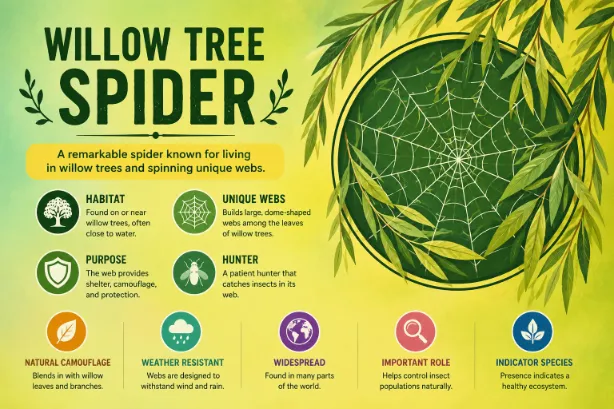
The size of willow tree spiders depends entirely on the species and environmental factors. Most UK garden spiders associated with willow trees are small to medium in size. Orb-weavers may appear large due to their leg span, but their bodies remain relatively small. Jumping spiders are much smaller and often go unnoticed unless closely observed.
The keyword willow tree spiders size is often searched because images online can exaggerate their scale. Close-up photography, lighting, and web positioning can make spiders appear significantly larger than they actually are. In reality, willow tree spiders are typically no larger than common garden spiders found across the UK, and they pose no physical threat.
Why Willow Trees Attract Willow Tree Spiders
Willow trees provide an ideal habitat for willow tree spiders due to their structure and location. The drooping branches create natural anchoring points for webs, while the surrounding environment is rich in insects. Aphids, flies, and moths are common around willow trees, providing a steady food source that attracts spider populations throughout the year.
Another reason willow tree spiders thrive in these trees is the combination of shelter and humidity. Willow trees often grow near rivers, ponds, or wetlands, creating a moist environment that supports insect life. This makes them one of the most productive hunting grounds for spiders, which use silk webs to capture prey efficiently and survive.
Are Willow Tree Spiders Dangerous or Harmful?
A common concern is whether willow tree spiders are dangerous or poisonous. In the UK, the answer is simple: willow tree spiders are not dangerous to humans. They are not aggressive and rarely bite. Even in the rare case of a bite, symptoms are typically mild and comparable to a minor insect sting rather than anything serious.
The phrase willow tree spiders dangerous is often searched due to fear created by large webs or sudden spider appearances. However, most species found in willow trees are beneficial predators that help control pest populations. Their venom is designed for small insects and is not medically significant to humans, making them safe to coexist with.
Do Willow Tree Spiders Bite Humans?
Willow tree spiders do not typically bite humans unless they feel directly threatened or are handled roughly. Even then, bites are extremely rare. The spiders prefer to escape rather than engage. Their primary focus is capturing insects, not interacting with larger animals, which makes human encounters largely harmless.
Searches for willow tree spiders bite often come from misinterpreting spider behaviour. Most spiders in willow trees are shy and avoid contact. If a bite does occur, it usually results in minor redness or irritation. There is no evidence suggesting that willow tree spiders in the UK pose any serious health risk to humans.
Spider Webs in Willow Trees – Natural or Problem?
The dramatic webs seen in willow trees are usually a natural result of spider activity. Willow tree spiders create intricate webs to trap flying insects. Over time, multiple spiders may occupy the same tree, producing dense silk patterns that can appear overwhelming but are completely normal in healthy ecosystems.
However, not all webbing in willow trees is caused by spiders. Some cases involve caterpillars or spider mites, which produce silk-like structures for protection. This is why willow tree spiders are sometimes incorrectly blamed for entire trees being covered in silk. Proper identification is essential to understand the true cause of the webbing.
Common Misconceptions About Willow Tree Spiders
Many misconceptions surround willow tree spiders due to online misinformation and dramatic imagery. One common myth is that dense webs indicate dangerous spider infestations. In reality, these webs often represent seasonal insect activity or harmless spider populations responding to abundant food sources in the environment.
Another misunderstanding is that willow tree spiders are a single rare species. In fact, the term includes several common UK spiders that are already present in many gardens. Mislabelled images and viral content often exaggerate their size and behaviour, leading to unnecessary fear. Education helps correct these assumptions effectively.
Ecological Importance of Willow Tree Spiders
Willow tree spiders play an important role in maintaining ecological balance. By feeding on insects such as flies, aphids, and moths, they naturally control pest populations without the need for chemical intervention. This makes them valuable contributors to healthy gardens, parks, and natural waterways where willow trees often grow.
Their presence also supports biodiversity by forming part of the food chain. Birds and other small predators feed on spiders, creating a balanced ecosystem. Willow tree spiders help regulate insect numbers and contribute to the overall health of willow tree environments, making them essential rather than harmful.
Conclusion – Should You Worry About Willow Tree Spiders?
Willow tree spiders are not something to fear. They are natural, beneficial, and commonly found in the UK wherever willow trees grow. Although their webs can appear dramatic, they are part of a healthy ecosystem. Understanding their behaviour helps reduce unnecessary concern and encourages appreciation of their ecological role.
In summary, willow tree spiders are harmless garden predators that contribute positively to the environment. They are not dangerous, not aggressive, and rarely interact with humans. By recognising their importance, we can better understand the balance of nature and appreciate the role they play in controlling insect populations.