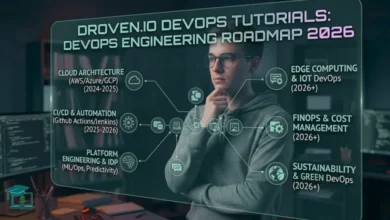
droven io tech education trends: AI, AR/VR & Microlearning Shaping the Future of Education (2026)

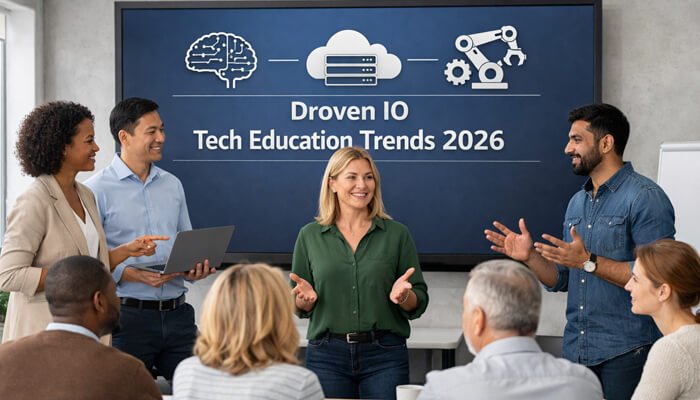
droven io tech education trends represent a major shift in how modern education systems are designed, delivered, and experienced in the digital age. Traditional learning models are rapidly evolving into technology-driven ecosystems where students engage through personalised, flexible, and interactive methods. This transformation is redefining classrooms across the globe in 2026.


droven io tech education trends are not just about introducing new tools but about reshaping the entire learning journey. From artificial intelligence to immersive virtual environments, these trends are enabling learners to access knowledge in more efficient and engaging ways. The focus is now on adaptability, accessibility, and future-ready skills that match global industry demands.
Artificial intelligence shaping droven io tech education trends
Artificial intelligence plays a central role in droven io tech education trends by creating highly personalised learning experiences. AI-powered platforms analyse student performance and adapt lessons in real time, ensuring that each learner receives content suited to their strengths and weaknesses. This makes education more efficient and outcome-focused.
Another important aspect of droven io tech education trends is the integration of intelligent tutoring systems and automated assessment tools. These technologies reduce the workload of educators while improving feedback speed and accuracy. However, ethical considerations such as data privacy and algorithm bias remain key challenges that must be carefully managed.
AR and VR transforming immersive learning in droven io tech education trends
Augmented reality and virtual reality are revolutionising droven io tech education trends by offering immersive and interactive learning environments. Students can now explore complex concepts through 3D simulations, virtual labs, and real-world scenarios that make learning more engaging and practical.
In droven io tech education trends, AR and VR are particularly valuable in fields such as medicine, engineering, and science education. These technologies allow learners to practise skills in safe, controlled environments before applying them in real life. Despite high implementation costs, adoption continues to grow as institutions recognise their long-term benefits.
Microlearning and flexible education models in droven io tech education trends
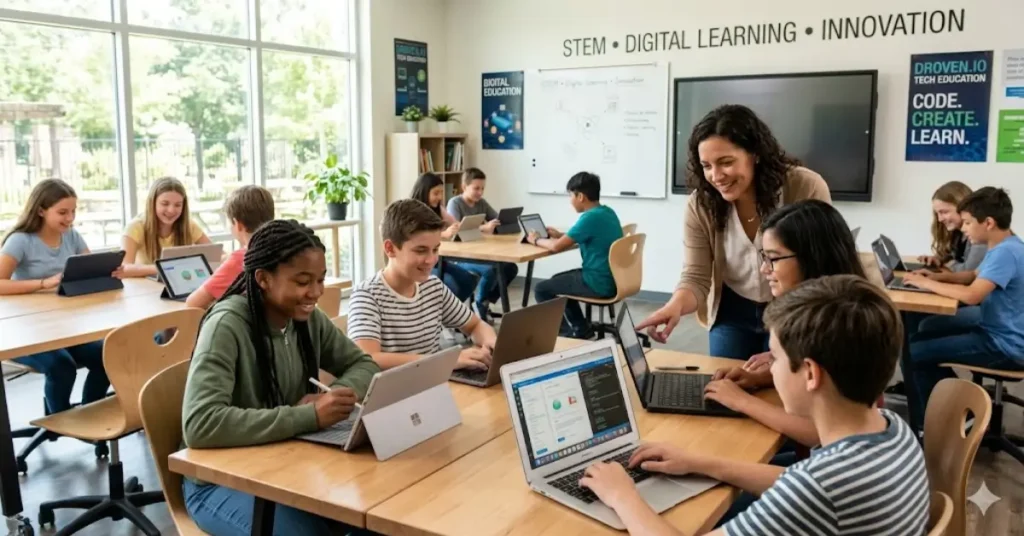
Microlearning is becoming a key feature of droven io tech education trends, offering short, focused lessons that improve knowledge retention and flexibility. This approach allows learners to study in small segments, making it easier to fit education into busy lifestyles and professional schedules.
droven io tech education trends also highlight a shift towards skill-based education rather than traditional degree-focused learning. Microlearning supports this transition by focusing on practical, job-ready skills such as coding, digital marketing, and data analysis. This ensures learners stay relevant in an ever-changing job market.
Cloud computing and digital transformation in droven io tech education trends
Cloud computing is a foundational element in droven io tech education trends, enabling seamless access to learning materials anytime and anywhere. It supports scalable education platforms where students and teachers can collaborate in real time, regardless of geographical barriers.
In addition, droven io tech education trends benefit from automation and digital classroom systems that streamline administrative tasks. Cloud-based learning management systems also improve organisation and accessibility, making education more efficient, flexible, and globally connected in the modern era.
Emerging skills and career opportunities in droven io tech education trends
droven io tech education trends are closely linked with the growing demand for advanced digital skills. Areas such as artificial intelligence, cybersecurity, cloud engineering, and software development are becoming essential for future careers. These trends ensure learners are equipped for the evolving job market.
Furthermore, droven io tech education trends encourage continuous learning and professional upskilling. As industries evolve rapidly, individuals must regularly update their knowledge to remain competitive. This creates a strong connection between education systems and real-world employment opportunities.
Challenges facing droven io tech education trends
Despite their benefits, droven io tech education trends face several challenges, including unequal access to technology and limited infrastructure in some regions. These barriers can prevent learners from fully benefiting from advanced digital education tools.
Another challenge in droven io tech education trends is the need for proper training for educators. Teachers must adapt to new technologies and teaching methods, which requires time and resources. Additionally, concerns around data security and ethical AI use continue to shape discussions in the education sector.
Future outlook of droven io tech education trends
The future of droven io tech education trends is expected to be driven by even more advanced technologies, including AI-driven personalised ecosystems and fully immersive metaverse classrooms. These innovations will make learning more interactive, global, and accessible.
droven io tech education trends will also likely incorporate blockchain-based certification systems and advanced analytics to track learning progress. This evolution will further bridge the gap between education and industry needs, creating a more efficient and future-ready learning environment.
Conclusion
droven io tech education trends are redefining the future of education by integrating advanced technologies such as AI, AR/VR, microlearning, and cloud computing. These innovations are making learning more personalised, flexible, and aligned with global skill demands.
As the world continues to evolve, droven io tech education trends will play a crucial role in shaping how knowledge is delivered and consumed. Embracing these changes ensures a more inclusive, efficient, and future-ready education system for learners everywhere.